Samuel Paul

It has for long been an accepted economic wisdom that the trajectory of economic development taken by ‘constituent units of a country’ (hereafter as ‘States’) tends to converge over time. In a timely intervention, Samuel Paul and Kala Seetharam Sridhar have, in their co-authored book entitled, The Paradox of India’s North-South Divide: Lessons from the States and Regions (hereafter as The Paradox) ‘counter’ this by drawing from variegated economic experiences of North and South Indian States. They examine the why and how of North-South divide by invoking a set of ‘proximate’ and ‘foundational’ factors to (i) test the ‘credibility’ of the claim that southern States performed better than their northern counterparts, (ii) examine ‘when and in what respect’ the South performed better than the North, and (iii) examine the ‘reasons behind the paradox’ of the North-South economic divide (pp. 5–6). While acknowledging the import of ‘proximate’ factors like literacy, health, education, infrastructure, and urbanization, among others, Paul and Sridhar contend that ‘foundational’ factors like governance, law and order are critical in determining divergent economic outcomes of North and South Indian States (pp. 33–34).
Reviewed by: Kham Khan Suan Hausing
Gunnel Cederlof

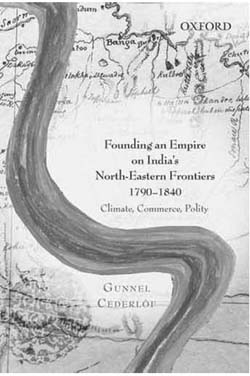
Gunnel Ceder’s Founding an Empire is an important contribution to the historical scholarship on colonial state making in South Asia in general and frontier and borderland studies in particular. Taken together, her earlier works on the interfaces of agrarian, environmental and legal histories in colonial and early colonial South India and eastern Bengal and the book under review on India’s North Eastern frontiers, speaks of the author’s…


Reviewed by: Debarati Bagchi
Manohar Mouli Biswas

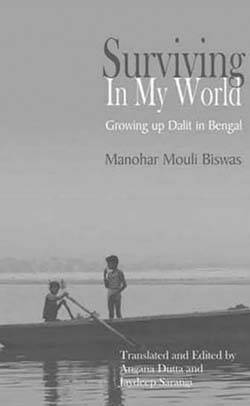
This is an engaging, poignant and important autobiography. It will be a serious ‘reality check’ for all readers! Biswas is a wonderful story teller, his almost ‘matter-of-fact’ style engages the reader and virtually transports him or her to the rice paddies, river banks and muddy creeks which are indelibly part of Biswas’s formative years.


Reviewed by: Rob Harle
Devaki Jain

This collection of essays edited by two eminent Indian women brings together contributions from some of the best known and most respected scholars and activists in the country. It is the second edition—coming three decades after the first—of a collection of essays that is described as a precursor to the ‘Towards Equality’ report. Surely a book that will endure as a benchmark in the field of women’s studies, to be quoted and cited for many years to come.


Reviewed by: Kalyani Menon-Sen
Tarun Das

Tarun Das transports the reader on a 30-year twin journey: he narrates the opening up of India, from its hesitant and wayward path before P.V. Narasimha Rao became Prime Minister in 1991, gaining traction after the latter launched economic reforms; that story is juxtaposed with a detailed account of the transformation of an obscure engineering industry association into what became for a time India’s most powerful non-state economic actor.


Reviewed by: Kishan S. Rana
T.P. Sreenivasan

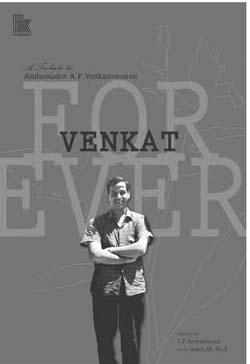
This is not just a tribute, as suggested in the title, it is a ‘labour of love’ undertaken at speed by a former admiring junior colleague and Venkat’s one sonin-law, and motivated, as the editors elaborate in an introductory note, by the conviction that the hero of the volume was such a unique person that he should be remembered forever.


Reviewed by: I.P. Khosla