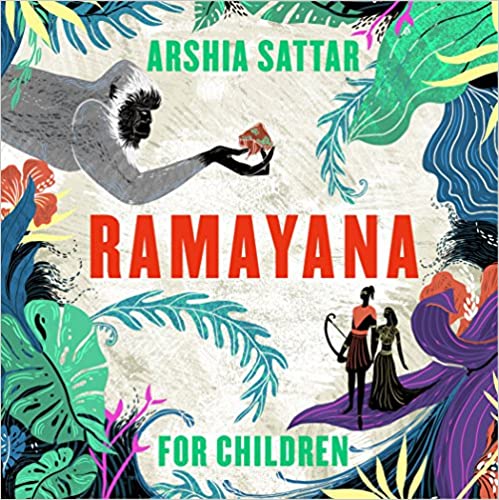
By Arshia Sattar

The Rama story has been around for a long time. It has been a part of people’s life and thought for generations in this country. An inspiration for both saints and savants over the ages, its longstanding and continued appeal for common folk too has been no less clear to many observers of this land. Its spread has also been documented by eminent scholars in modern times. About three decades ago, this was done in fascinating detail, with India as the background, by A.K. Ramanujan in his acclaimed dissertation Three Hundred Ramayanas.


Reviewed by: A.N.D. Haksar
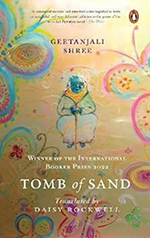
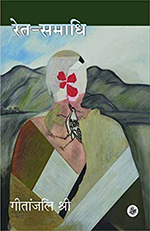
Geetanjali Shree. Translated from the original Hindi by Daisy Rockwell

Reading Ret Samadhi and Tomb of Sand is exhilarating, challenging, even exasperating; such is its span and scope, its playful exuberance and idiosyncratic originality of style, playing out differently in the two versions. Given its more recent American/English avatar, one may evoke Whitman: it is vast, it contains multitudes. Given its incontrovertible rootedness in its Indian-subcontinental milieu, however, one must invoke the Mahabharata, the grand epic that it references at the very outset.


Reviewed by: Maya Joshi
Geetanjali Shree

As a fellow writer, the fifth novel of Geetanjali Shree leaves you wonderstruck with its sweeping imagination and the sheer power of language, unprecedented and uninhibited. She is known for her experiments with content and form, but this novel keeps you in grips with its storyline as well, which had not really been her forte earlier.


Reviewed by: Alka Saraogi
Chandan Pandey. Translated from the original Hindi by Bharatbhooshan Tiwari

The postscript to this novel says it is dedicated ‘to the brave Uttarakhand police officer, Gagandeep Singh, who saved a young man from a lynch mob’. This dedication indicates the story line that one can expect: it is about individual acts of courage against an establishment that is overwhelmingly powerful.The timeline of the story is three days. On day one, the protagonist, Arjun, an author who is not yet thirty-three, gets a call from one of his ex-girlfriends telling him that her husband has disappeared.


Reviewed by: Meenakshi Shivram
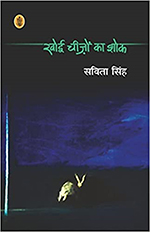
Savita Singh

Amuch-admired traditional genre of poetry, elegy does register the harrowing nature of grief that one experiences at the departure of someone very close to us and whose nagging absence never ebbs.  The conventional elegy unravels an ever-growing sense of total despair in the form of sorrow, longing, yearning and pining entwined with loneliness, but it also appears banal, repetitive and undramatic.


Reviewed by: Shafey Kidwai
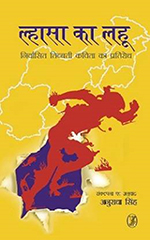
Edited and translated from the Tibetan into Hindi by Anuradha Singh

Lhasa ka Lahu is a critical translation of three Tibetan poets writing from exile in India: Tenzin Tsundue (b. 1975), Bhuchung D Sonam (b.1972) and Tsering Wangmo Dhompa (b. 1969). Of the three, Dhompa is the only female poet in the collection and holds the distinction of being the first Tibetan woman to be published in English.


Reviewed by: Aakriti Mandhwani