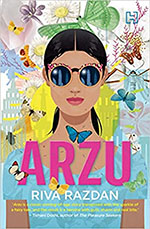
Riva Razdan
ARZU
2021

Arzu is essentially a coming-of-age story but the beauty of the book lies in the fact that it is able to beautifully capture the process of growth, change and hard work, which can be tremendously difficult to write about in an interesting way. Arzu’s efforts to develop herself and find her place in the world are inspiring, especially for young readers who are trying to figure themselves out.


Reviewed by: Ilika Trivedi
Aijaz Ahmad (1941–2022) By Sudhanva Deshpande Aijaz Ahmad’s most celebrated book is In Theory: Classes, Nations, Literatures. It is, somewhat surprisingly, the only book he wrote. He published four other books which are all collections of essays (one of which, Lineages of the Present, appeared in two editions with non-identical tables of contents), three books…

Editorial

A delightful if apocryphal story involves the legendary Hindustani vocalist Ustad Bade Ghulam Ali Khan switching off the radio halfway through a Lata Mangeshkar broadcast, muttering to himself ‘Kambakht ladki besur hoti hi nahin hai!’ (The accursed girl doesn’t strike a single false note anywhere!). This facile technical perfection was in a sense deceptive. It…


Editorial
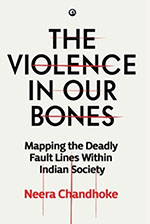
Neera Chandhoke

In The Violence in Our Bones: Mapping the Deadly Fault Lines Within Indian Society, Professor Neera Chandhoke compels us to deliberate on violence in its many manifestations in India and suggests how we may extricate ourselves from this abyss by inventively imagining participatory democracy. The treatment of violence in the social sciences often diminishes the starkness of human tragedy, when reduced to mere statistics. While recognizing that violent urges might lie dormant in our psyche, Chandhoke is concerned with stalling the eruption of these violent urges onto the socio-political arena.


Reviewed by: Swaha Swetambara Das
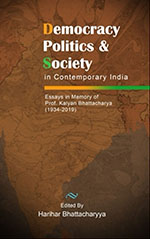
Harihar Bhattacharyya

Contemporary buzz on Indian democracy (Roy Chowdhury and Keane, 2021; Yadav, 2020;  Nielsen and Nielsen, 2019; Rudolph and Rudolph, 2014) analyses its evolving features. The book under review, written in memory of Professor Kalyan Bhattacharya (a faculty of Political Science in Vivekananda Mahavidyalay under the University of Burdwan, 1966-1994), probes into the making of the democracy discourse in India.


Reviewed by: Pratip Chattopadhyay
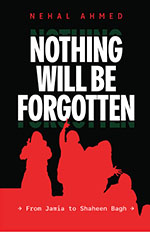
Nehal Ahmed

15 December 2019 was the darkest day of my life. On this day, the Delhi police entered our campus and beat us like animals.’ These lines from the introduction of Nehal Ahmed’s new book Nothing will be Forgotten transport our minds to the day when the University campus was turned into a warzone. Students were labelled terrorists. Gory visuals still refuse to leave our minds. A peaceful protest culminating in students running for their lives. Police rampaging through reading rooms and libraries, hunting for students like a pack of wolves.


Reviewed by: Surajkumar Thube