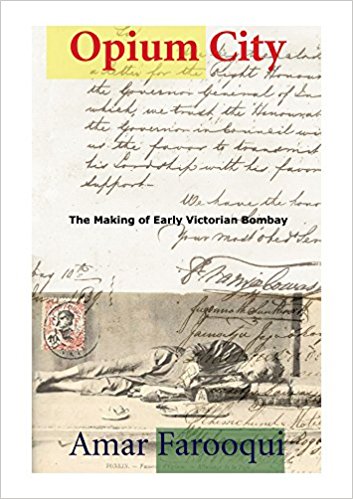
Amar Farooqui

Amar Farooqui’s contention that it was early nineteenth century Bombay’s opium trade which was ‘the defining feature’ of its economic world and its business class, is a provocative statement that takes us straight into the heart of a controversy. Does Bombay really merit the title of ‘Opium City’? Was it really opium, as opposed to cotton or ‘white gold’,


Reviewed by: Mariam Dossal
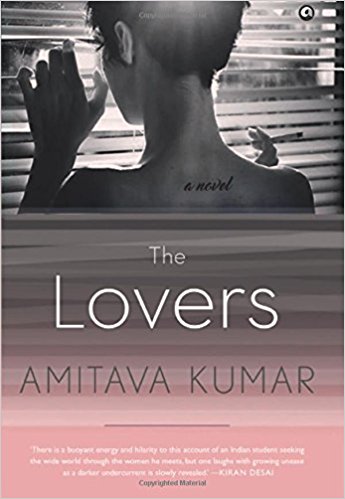
Amitava Kumar

Amitava Kumar is a widely admired writer, chiefly for his non-fiction work like his A Matter of Rats, a book about Patna that is as insightful as it is witty. The Lovers is his second novel, set, not unsurprisingly mainly in a university on the east coast of the US but with vivid images of Ara, the town in Bihar where the protagonist, Kailash grew up. In a BBC interview not so long ago Hanif Qureishi said, a little lugubriously, ‘ Well, all novels are about love.’


Reviewed by: Bhaskar Ghose
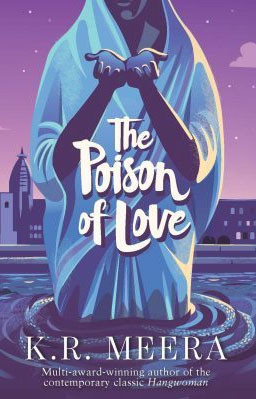
K.R. Meera

Anybody reading the blurb of the book will be forgiven for feeling a sense of déjà vu—another novel about the atrocities and indignities meted out to the widows of Vrindavan! Yes, the book does contain some harrowing accounts, but read it and you’ll realize what a tale with a twist it is. It is a very short novel, only about a hundred pages long, but it racks the reader with its very unusual point of view.


Reviewed by: Meera Rajagopalan
Mini Krishnan

There is a kind of anger that is necessary in the world as it is right now. It is an anger that sticks to the truth like tar to your shoe on a hot day. It is the anger that powers the best storytellers, who not only stick to the truth but sing while they do it. This is a popular stand currently, because it is powerful. We live in a time where it is possible, as chaos shifts under our feet, to break the rules we have been fed and speak out, even if only for an instant.


Reviewed by: Rimi B. Chatterjee
Aruna Chakravarti

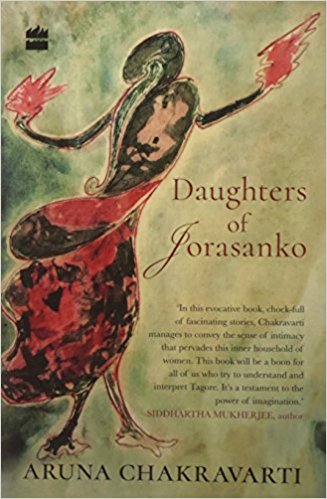
Daughters of Jorasanko, the recent novel from Aruna Chakravarti, reasserts her position as a perceptive and sensitive writer. Though written as a sequel, it does not lean on Jorasanko, but asserts its independence in its totally different tone, mood and pace. The female characters in Daughters of Jorasanko vividly reflect a change from the previous generation of women in Jorasanko…


Reviewed by: Devika Khanna Narula
Imre Banga

It would not be an exaggeration to state that since his sesquicentennial birth anniversary celebrations began in 2011, Rabindranath Tagore has been the focus of attention of plenty of scholars all around the world. As a global figure, Tagore transcends the boundaries of language and reaches out to people distant both in time and space. So it is no wonder that seminars leading to anthologies based on his oeuvre have flooded the market over the past few years.


Reviewed by: Somdatta Mandal