The two books under review showcase the legacy of two music families in different ways. Quraishi’s book is rich in illustrations—it has drawn on the photo albums of the Dagar clan. Raghavendra Joshi’s book has some family photographs as well, but the text is central—a tribute to Bhimsen Joshi by his eldest son, it is a story of family hurt and neglect.
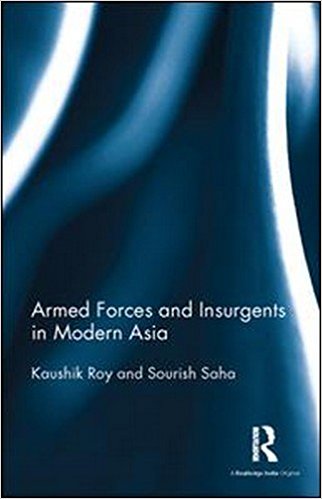
The book is a product of collaboration between an unlikely duo: a history professor at Jadavpur University and a bio-statistical consultant for pharmaceutical companies based in the US. It began in a conversation over coffee at Kolkata’s Park Street in which the two discussed governance, poverty and armed rebellions in India, with the discussion expanding to include comparisons and contrasts with the experience of insurgency and counter-insurgency across the globe.
May, 1974 in India was a time of fervent activity and excitement. The air was rife with talk of an impending All India General ‘Railway Strike’. The strike was due to start on 8th May, 1974 and both the state and the railway unions braced for the event. The railway unions sought to organize themselves under an umbrella organization called the National Committee for Railwaymen’s Struggle (NCCRS).
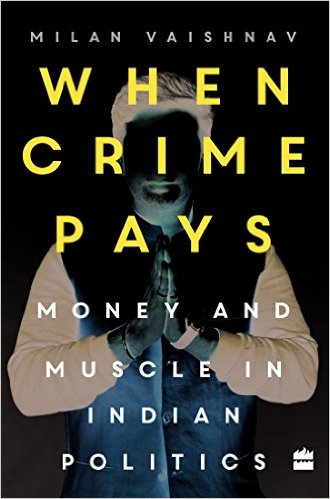
At a time when Bahubali of a cinematic kind has become the buzz word in India, there is another timely intervention on the topic of Bahubali, but of a political kind. Milan Vaishnav’s new book titled When Crime Pays: Money and Muscle in Indian Politics, claims to be the first comprehensive study of the nexus between crime and democracy in India.
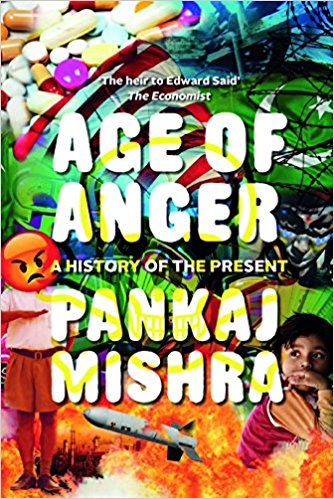
Pankaj Mishra’s work includes literary and non-fiction texts and essays that traverse a broad canvas, which could not possibly fit into a single, simple sentence: the present book fits into that description well. Age of Anger weaves across centuries and continents, thinkers and public figures, in an ambitious attempt to outline a genealogy of the present across seven chapters and in about four hundred pages.
Poverty and the Quest for Life: Spiritual and Material Striving in Rural India (2015), by Bhrigupati Singh first and foremost bears the proof of a successful ethnography. Besides detailed ethnographic data and archival material, it is his constant reflection on himself and his experiences that I have found as one of the most impressive and interesting aspects of the book.