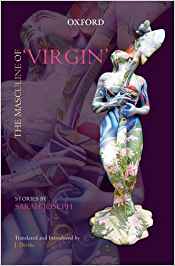
Sarah Joseph

This is a brilliant collection of stories,personally chosen by J. Devika, Associate Professor at CDS, Trivandrum, and Mini Krishnan, the well known editor particularly of translated works, at OUP. As a result, there is a quality of the unusual, the comic, the macabre and the holy, in an odd sense of equivalence.


Reviewed by: Susan Visvanathan
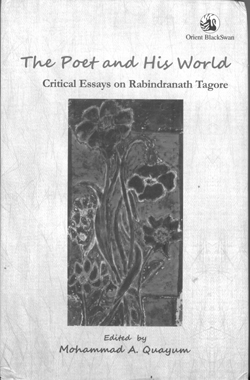
Mohammad A. Quayum

Recently, in a talk given by Professor Nigel Leask at the University of Delhi on Scotland’s national poet, Robert Burns, he struck a comparison between Burns and Rabindranath Tagore. He mentioned how both appropriated Scottish ballads and folk music in their respective compositions and therefore, how both could be aptly titled ‘people’s poet’ or ‘poet of the soil’.


Reviewed by: Nilanjana Mukherjee
Rabindranath Tagore

Referring to the craft of translation and its difficulties, J.M. Coetzee had commented in his rather well-known essay, ‘Roads to Translation’ that ‘Translation seems to me a craft in a way that cabinet-making is a craft. There is no substantial theory of cabinet-making, and no philosophy of cabinet-making except the ideal of being a good cabinet-maker, plus a handful of precepts relating to tools and to types of wood’ (Coetzee 151).


Reviewed by: Sanjukta Dasgupta
Ruth Prawer Jhabvala

Once again in her latest novel, as in most of her earlier work, Ruth Prawer Jhabvala explores the situa­tion of foreigners in India and what India does to them. But unlike her earlier work (seven novels and three collections of short stories), here for the first time…


Reviewed by: Meenakshi Mukherjee
Anand Neelakantan

Mythology has always been a good source of raw material for fiction in literature. Recent activity on the Indian literary scene has reaffirmed this old proposition with a series of publications, including some bestsellers.


Reviewed by: A.N.D. Haksar