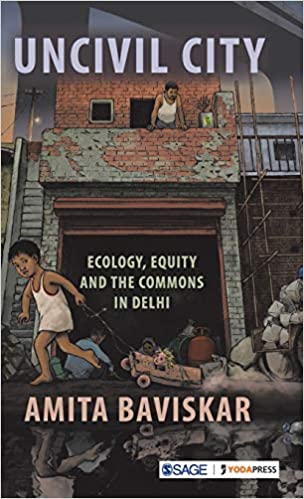
Amita Baviskar brings her careful and serious considerations to the city of Delhi, and its environs, including Gurgaon, giving us interesting insights into an urban constellation we know so well. She looks at the way a city is constructed in terms of experiences and events.
The pandemic of Covid is here to stay and we have to learn to live with it, as it becomes endemic. Among the many things the Covid pandemic has exposed—the neglect of public health, the disastrous implications of privatization of health, the utter lack of public health.
Usha Sanyal’s book on new institutions of Islamic learning for women is an important study on the relatively under-researched theme of South Asian Muslim women’s changing engagement with religious learning. Based on ethnographic fieldwork in two institutions namely.
This book intrigues. It comes heavily recommended. It was released, in a high-powered function graced by two former RBI Governors (YV Reddy and Duvvuri Subbarao) as speakers and a galaxy of present and former RBI officials, Deputy Governors and so on.
Most of us still peruse a list of hotels that pop up on various aggregators like we do a menu at an expensive restaurant—with one eye on the prices on the right. We are usually looking for a hotel or a homestay within our budget which will meet our basic requirements.
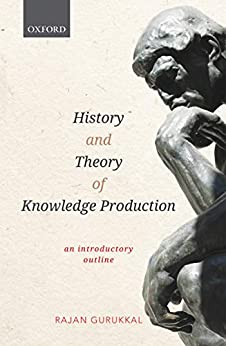
With a partial image of Rodin’s iconic sculpture of The Thinker on the cover, and a dedication to Romila Thapar, the undisputed doyenne of ancient Indian history, Rajan Gurukkal’s History and Theory of Knowledge Production is indeed a formidable feat of scholarship.