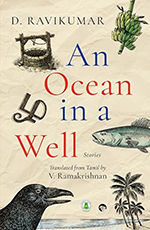
In ‘Un-Timely’, a woman who is granted one final day with her lover before death separates them, treats mortality as a boundary briefly permeable to grief, and this is narrated as a matter of fact rather than as fantasy. ‘Zha, the Unique Letter’ turns the device toward the state, imagining a government banning a Tamil letter outright, its bureaucratic plainness exposing how power echoes through speech. The translator clarifies in a note that the letter ‘zha’, which once alluded to the liberation struggle for eezham in Sri Lanka,
A positive spirit pervades most of the stories, with the characters facing and overcoming their difficulties with the help of others. Even when there are notes of bitterness and fear, for instance, in the first story about the fear left behind as the legacy of the Partition, or in another story, a courtesan’s anger at the double standards employed by the bourgeois world, the climax of the stories is usually positive with a message of hope. Therefore, it is a bit of a surprise to read the last story in the collection, which is about the harsh reality of the life of a woman who does not know her place—she wants to be educated and tries to educate herself—but the story ends with her husband destroying her books and with her pouring kerosene over herself and burning herself to death.
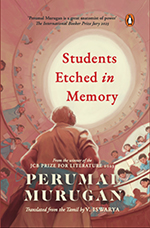
Such a setting recurs in his novels. Many of his students hail from the ‘rock bottom of society’ (p. 108) with non-literate parents for whom making ends meet takes urgent precedence over getting higher education. Fear of the English language haunts many of his students. Their inadequate command over it seems insurmountable to them because the department of English in colleges is either under-staffed or lacks well-trained teaching staff. The instance illustrates the shortcoming of ethno-centric medium of instruction in Tamil Nadu but also resembles various linguistic contexts where asmita (identity) built on the so-called first language—such as Odia—stymies the mobility of the disadvantaged students in a globalized world. Institutional failure to provide resources for competency in the English language reinforces caste,
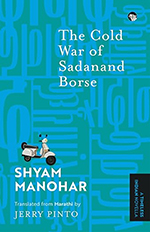
As a short novella, however, it dragged and dragged and dragged till the dialogues—as repetitive as in real life—started spinning in my head. My copy had some misaligned pages—while pages 81 to 95 were missing altogether, the pagination didn’t just jump. Instead, the pages between 67 and 80 were repeated in random combinations, several times, and I didn’t even realize it—the entire structure being so similar—dialogues in a loop going nowhere, a sense of overwhelming ennui, the pointlessness of everything… if that was what the writer intended to convey, he succeeded, but left me, the reader, with the sense that the book was quite pointless.
It is of course possible that the Marathi prose sparkled; the English text was simply prosaic. And while I have frequently felt thrilled at the inventiveness of writers from Arundhati Roy to Zadie Smith, realizing how
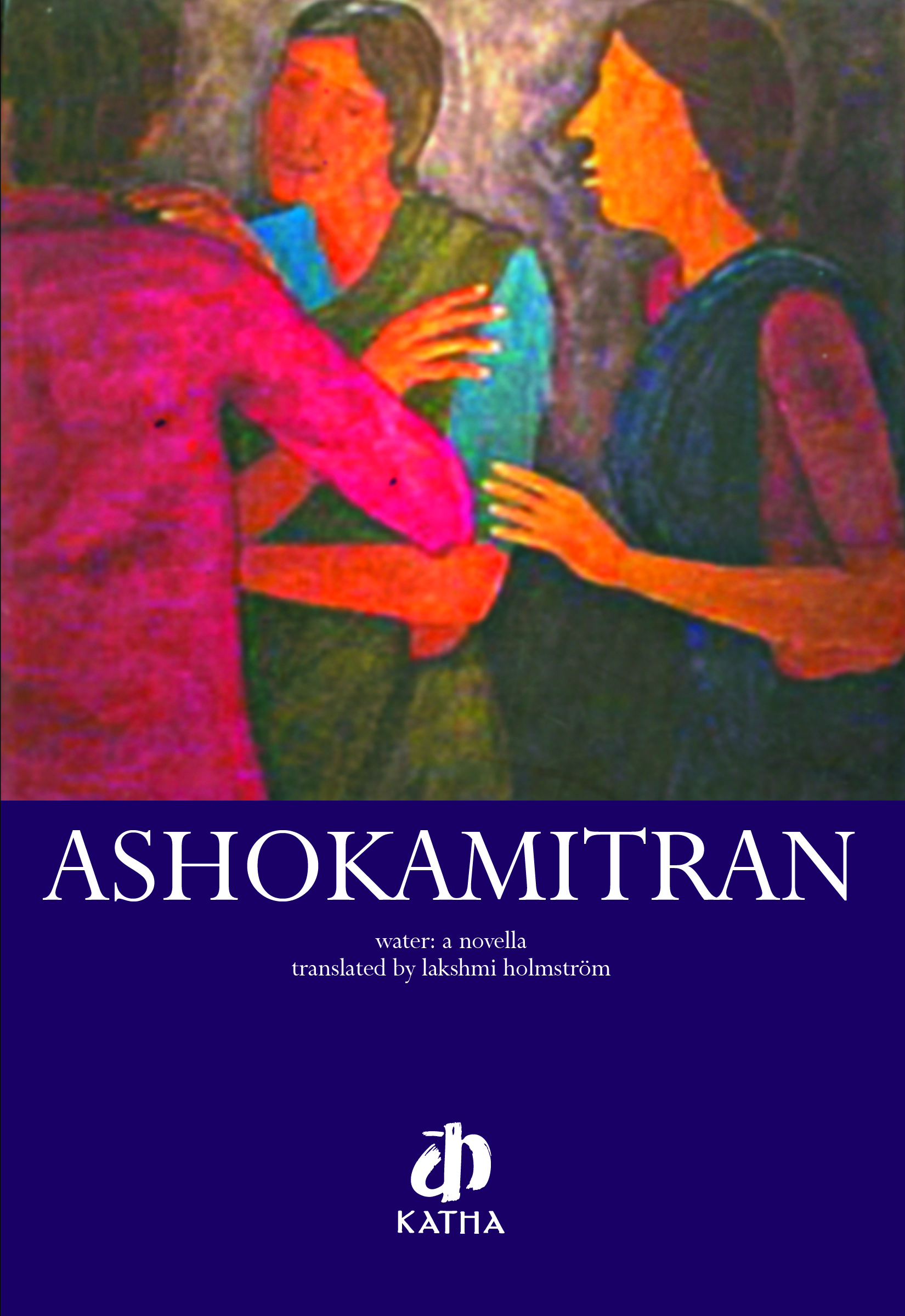
Jamuna and Chaya are sisters and residents of the street, as are Teacher Amma, the landlady, and assorted other characters. They navigate their way through the water drought according to their individual sensibilities. Teacher Amma bears the brunt of an abusive husband and a cheerless home, and yet has the empathy to offer Jamuna a shoulder to cry on when Chaya says she can’t take it anymore and moves out to a hostel.
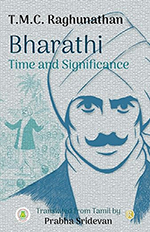
Raghunathan, while delving deeper into Sister Nivedita’s advice to Bharati, also brings out the fact that Swami Vivekananda was ‘the patriot of all patriots and the father of Indian nationalism’ whose impact was felt not only in Bengal but in far-away Tamil Nadu too: on VOC, Bharati and Subramania Siva, among others. A chunk of this chapter also deals with Sister Nivedita’s role in the Indian struggle for Independence. When Bharati met Sister Nivedita, they were all dejected after the Partition of Bengal. And then her fiery speech to him was the ‘sun that dispelled the darkness of his soul’. Raghunathan goes on to the role played by the Bhagavad Gita in the freedom struggle,