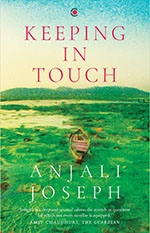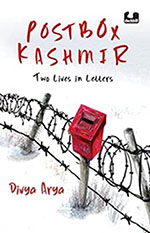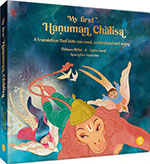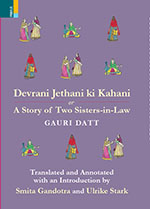
I belong to a generation that grew up reading Nayantara Sahgal. Her early works, like her autobiography Prison and Chocolate Cake, captured for us a time that many of us had not personally experienced but could vividly imagine through her writings.Even as India grew older, we aged and the idealism of youth began to lose some of its sheen, Nayantara Sahgal’s was a voice that never failed to make you pause and think.
2021
The canonical Hindi poet Mahadevi Varma (1907-1987) has to some extent suffered from being too revered. In well-meaning hagiography, she has been cast as overly pious, almost joyless in her asceticism for her art. In this context, Ruth Vanita’s attentive translation of Varma’s collection of sketches, My Family, has revitalized Varma as more spiritually buoyant, as someone deeply invested and in love with wider, larger, more spiralling notions of family and kinship—especially one that includes animal companions.
The number of celebrated poets and novelists who began their career reviewing books is probably much higher than is currently known. To start with, current literary culture, while being sustained invisibly by reviewing, is rather uncharitable towards the modest review. Writers too have colluded with this ethos and have tended to distance themselves from their own ‘jobbing work’ once they have achieved name and fame. Dr. Johnson of the eighteenth century was probably the last known writer of English literature who was as much of a ‘grandly generalizing sage’ as he was a ‘proletarianized hack’ (Terry Eagleton, The Function of Criticism, p. 32.)
2020
Afterlives is the latest publication from Abdulrazak Gurnah, the Nobel Prize winner for literature in 2021. The Nobel Committee has very aptly remarked that Gurnah is being awarded for his uncompromising and compassionate penetration of the effects of colonialism and the fate of the refugee in the gulf between cultures and continents (The New York Times).
A book awarded the Saraswati Samman, Ramakathaiyum Iramayanankalum (2005) is an ambitious work by the Thamizh scholar AA Manavalan, a comparative study of forty-eight Ramakathas (though it references more) from the 5th century BCE to the 19th century CE, written in twenty-two languages—Pali, Sanskrit, Prakrit, Tibetan, Tamil, Old Javanese, Japanese, Telugu, Assamese, Malayalam, Bengali, Kannada, Marathi, Hindi, Odia, Persian, Malay, Burmese, Filipino, Thai, Laotian and Kashmiri. We are fortunate now to have a meticulously done translation in English by CT Indra and Prema Jagannathan, one that is extremely readable without losing out on the scholarship and the research that has gone into both the Thamizh work and the translation.
The title of this well-researched book, reflecting a life-time’s work, is serendipitous. Mirrored in it is a couplet written by this medieval poet, which also figures as the epigraph:I have made my mind as pure as Ganga water,Hari follows after, calling out, ‘Kabir, Kabir’The echoing repetition of Kabir’s name, even more than the plurality which is a quintessential aspect of the cultural memory of this poet, suggests the indefinite and nebulous in the striving for the mystical. In an inversion of hierarchy, it is Hari who runs after Kabir, calling out to his devotee.