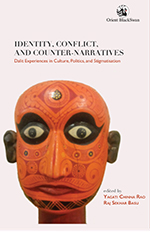
Edited by Yagati Chinna Rao and Raj Sekhar Basu

2025

There is a strong plea made for the foregrounding of the non-Brahman (emic) outlook in preference to the dominant, more or less traditionalist (etic) opinions on caste. Quoting Badri Narayan, the editors observe that ‘mainstream histories have always involved the “de-historicisation of Dalits”, which Dalits have identified and responded to by denying the characterization of themselves as passive objects. This denial takes the form of a search for their own history….’ However, there is a regrettable lack of clarity here. The onus of undoing the misrepresentations of history, if vested in the Dalits alone, would make the correct writing of history a rather exclusivist, if not essentialist, endeavour.


Reviewed by: Tapan Basu
By Prabhat Patnaik

While Keynes saw state intervention as an embodiment of ‘social intervention’ that could achieve full employment, Patnaik argues how states are themselves constrained in their interventions, apart from the fact that genuine full employment can never be achieved under Capitalism. Marx attributed the incapacity of states to improve Capitalism to the fact that states themselves were controlled by Capitalists—what Patnaik refers to as a sociological perception.


Reviewed by: Padmini Swaminathan
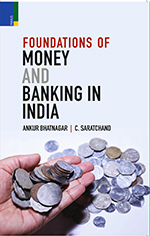
By Ankur Bhatnagar and C. Saratchand

This includes details of the origins of commercial banks during colonial times, the bank nationalization of 1969 and its impact on credit markets, the liberalization era of the 1990s and the rise of private banks. The authors have elaborately covered cooperative banks and regional rural banks, explaining their role in financial inclusion, highlighting and discussing the tension between profitability and social responsibility. There is a detailed discussion of the current structure of the banking system, including public sector banks,


Reviewed by: TCA Ranganathan
By Sanjoy Hazarika

Hazarika pays close attention to how these changing river landscapes make simple ideas of belonging more complicated. The river flows through Tibet, India and Bangladesh, but its life and culture go beyond national borders. The book’s discussions of migration and identity politics in Assam stand out. Without taking sides, Hazarika shows how environmental risks, erosion, displacement and worries about population all come together in complex ways. This becomes clear when he reminds one of the earthquake of 1950 and the devastation it left. It was also when the river had a massive course correction. At times, River Traveller feels almost like a farewell to the environment. Climate change is a constant presence in the story. Talks of melting glaciers, unpredictable rain


Reviewed by: Parvin Sultana
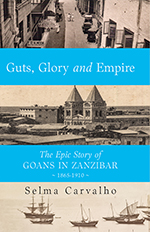
By Selma Carvalho

There were labour migrations mostly of sailors and cooks as well as men of enterprise and service with the result that a small but influential group of Goans in Zanzibar soon became well known as influential retailers working for big European firms like Spencer & Co., shop owners, journalists managing the government press and post offices. Carvalho tracks this story by locating specific individuals and we will do the same to highlight the merits of the approach. CR Souza is the principal protagonist who arrived in Goa in 1865 to become one of its richest merchants. His connections with English captains, however tenuous, helped. By 1891, his experience as a table servant and cook brought him in close proximity to Consul (Kirk) and Sultan (Barghash). Souza entered retail trade and became part of what Carvalho calls the Goan shopocracy in East Africa, after which they were


Reviewed by: Lakshmi Subramanian
Edited by Jaya S. Tyagi, Saiyid Zaheer Husain Jafri and Amar Farooqui

Indian weavers were not totally oblivious of the idea of cooperative societies as panchayats or shrenis had existed in India since ancient times. Moreover, panchayats also used to control transactions and prices of goods till as late as the early nineteenth century. Yet these very weavers could not associate themselves with the new organizations formed by the government. The formation of new organizations and societies interfaced with the existing social relations. In a community where ustads, grihastas and sardars had always played an important role in decision making, and where panchayats were included within the public sphere of the community, attempts to elect or nominate


Reviewed by: Manu V Devadevan