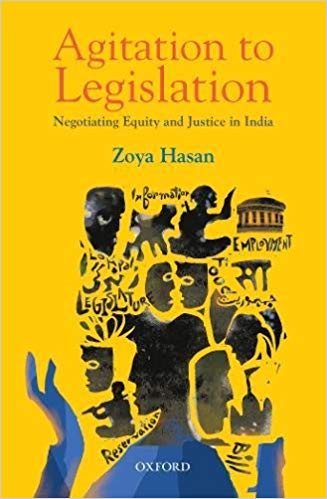
In their July 2017 publication under the eloquent title Indian Income Inequality 1922-2014: From British Raj to Billionaire Raj? the world’s foremost economic analysts Lucas Chancel and Thomas Piketty remind us that while the process of divergence of income (and hence wealth accumulation) of the ultra rich commenced in India with Prime Minister Rajiv Gandhi in 1984, this really took off after the ‘liberalization’ of 1991 by Narasimha Rao bringing to an end India’s experiment with ‘Socialism’.
Researching and comprehending…
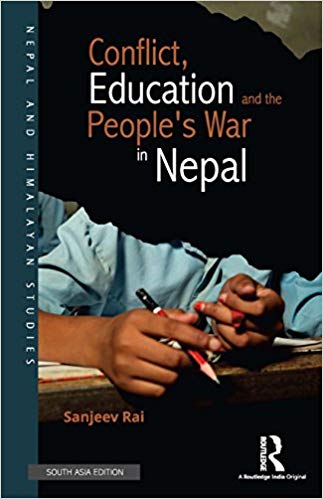
Conflict affects every aspect of human life. In South Asia, the most common lenses through which we understand conflict are ethnicity, religion, caste, gender and so on. It is rather surprising that in a region where conflict remains a dominant part of the socio-political discourse, there has been little attention paid to other dimensions in understanding conflicts.
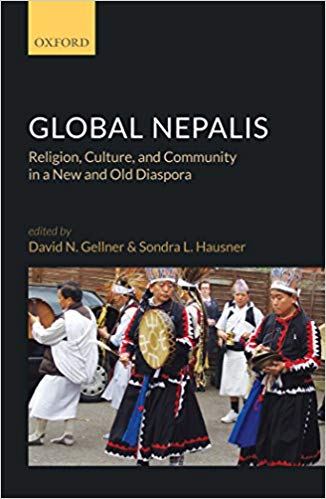
The term ‘diaspora’ is generally understood as a people belonging to one ethnic group originating from a place, but dispersed geographically. Though scattered, the diaspora groups usually tend to maintain relations with their place of origin and also with the other dispersed groups. Estimatedly, about 10 percent of human population live in diasporic situations (about 700 to 800 million).
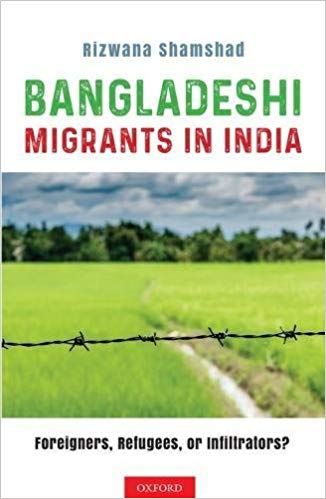
Rizwana Shamshad’s Bangladeshi Migrants In India: Foreigners, Refugees, or Infiltrators? is a highly relevant and context-sensitive study of the ‘Indian discourse’, a collection of many discourses on one of the most politicized migrant communities in the subcontinent.
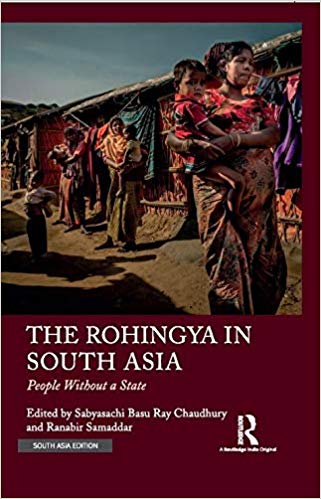
Statelessness is a situation when one has no country to call once’s own. It is dehumanizing to be denied the rights of citizens granted by the state. A stateless person faces difficulty in accessing education, health, livelihood necessary for holistic development of a human being. Every country has laws for granting citizenship. Lack of clarity in written laws and anomalies in its application might lead to statelessness.