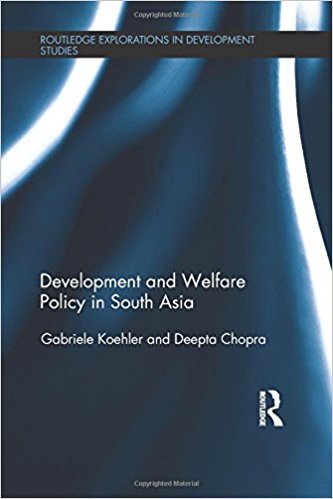
Despite the significant achievements in poverty reduction made by the South Asian countries, the region remains home to over 40 per cent of the developing world’s total poor. More than 570 million people survive on less than US$1.25 a day and over 60 per cent live without adequate sanitation. To compound the challenges of population growth and poverty, environmental degradation and climate change, South Asia has also been exposed to increased frequency of natural disasters, which is undermining the sub-region’s economic performance. With a rising interest in the role of public policy and the role of the state in the developmental process, Development and Welfare Policy in South Asia is a welcome addition to the development studies literature.