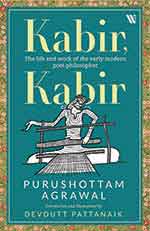
Purushottam Agrawal. Introduction and illustrations by Devdutt Pattanaik

The title of this well-researched book, reflecting a life-time’s work, is serendipitous. Mirrored in it is a couplet written by this medieval poet, which also figures as the epigraph:I have made my mind as pure as Ganga water,Hari follows after, calling out, ‘Kabir, Kabir’The echoing repetition of Kabir’s name, even more than the plurality which is a quintessential aspect of the cultural memory of this poet, suggests the indefinite and nebulous in the striving for the mystical. In an inversion of hierarchy, it is Hari who runs after Kabir, calling out to his devotee.


Reviewed by: Rohini Mokashi-Punekar
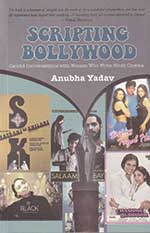
Anubha Yadav

In a country like ours, where actors, read heroes and heroines, take centre stage over everything else in popular Hindustani cinema, are more important than even the directors, one wonders how important scripts are, and hence scriptwriters.  To begin with a confession, I thought more about it once this book hit the market.The Indian screenwriter Anjum Rajabali (known for scripting Drohkaal, Ghulam, Rajneeti and Arakshan to name a few) has penned the Foreword to this book where he starts by quoting Alfred Hitchcock: ‘To make a great film, you need three things—the script, the script and the script.’ 


Reviewed by: Saba Mahmood Bashir
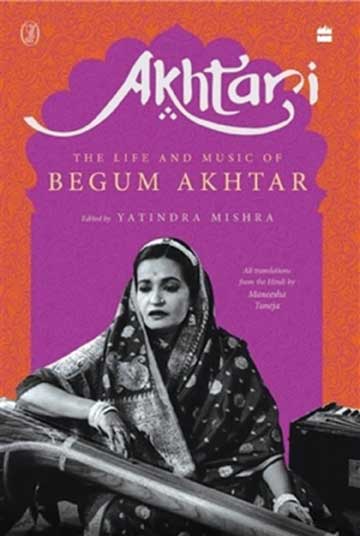
Yatindra Mishra. Translated from the original Hindi by Maneesha Taneja

At the outset, let me admit I enjoyed reading the book: it makes for a pleasant change from the weakly researched but pretentious High-Church-academic treatises on music it has been my lot to review recently. Much of its content conveys the impression of being honestly felt, which makes even its many shortcomings relatable. That said, it is not an easy book to categorize.


Reviewed by: Abhik Majumdar
Prem Kumari Srivastava

The edited volume makes a significant intervention in the hitherto extant discourse on tribal/Adivasi literary studies in India. As Prem Kumari Srivastava states in her introduction, ‘this book debates and discusses tribal literatures and oral expressions that have long been surrounded by silences, even though they embrace us all the time’ (p. xiii).  The contributors to the book make it a point to unfold these silences, probing the narratives of pain, deprivation and dispossession that lie therein. Srivastava highlights the theme and tenor of the book in the introduction asserting that the tribal writings symbolize a revolutionary spirit against the established culture.


Reviewed by: Bharti Arora
J. Furcifer Bhairav & Rakesh Khanna

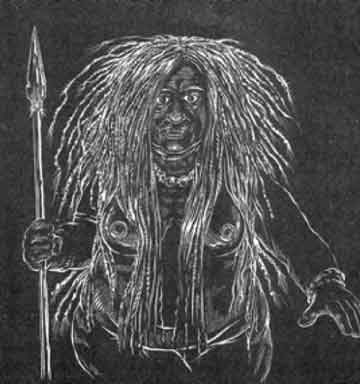
As the title suggests, this work is a popular encyclopaedia, which attempts to compile narratives on ghosts, demons, and monsters from the Indian subcontinent. Edited by J Furcifer Bhairav and Rakesh Khanna, this book excavates the ‘spooky’ stories of mythical, tribal and contemporary origins. It constitutes 332 entries with multiple sub-entries, and its lucid writing style is supported by detailed illustrations, inviting a wide range of readership. A significant contribution of this work lies in tracing the micro and macro tales from Assam to the Konkan coast, Kashmir to Odisha, and Tibet to Lakshadweep.


Reviewed by: Shivani Sharma and Prashant Mishra
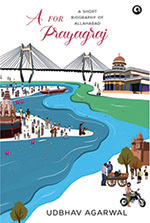
Udbhav Agarwal

Allahabad has had its share of books. From literary anthologies to histories to the fascination with the Kumbh Mela, this city, where the rivers meet has attracted the attention of insiders as well as outsiders. Huien Tsang, the Chinese chronicler, writes that he visited Prayaga now officially called Prayagraj in 643 AD, during Harshvardhana’s reign.


Reviewed by: Sohail Akbar