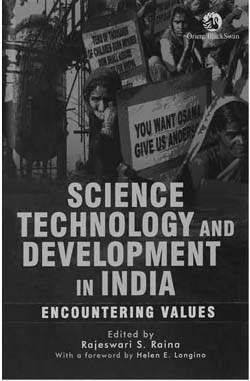
Rajeswari S. Raina

Science and technology are often understood as socially disembodied and outside the cultural domain of values, although this view has been criticized by scholars working in the field of Science, Technology and Society (STS) Studies since the 1970s, and the scholarly endeavours resonated well with the civil society critique of the epistemology of modern science and the moral universe S&T was embedded in.


Reviewed by: Shiju Sam Varughese
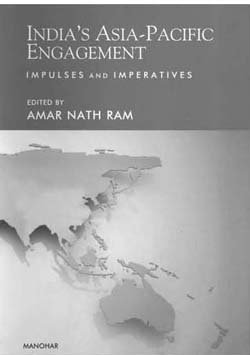
Amar Nath Ram
324
2015

Thanks, perhaps to the Himalayas, India has largely had a westwards ori-entation. Or to be a bit more accurate, the West has always looked towards India, from the time of Alexander the Great. Neither statement is fully true but it does tell us how India’s links with the East have never been quite as deep as with the region to the West of India. Historically the only link that India had with the East was through Buddhism. In a large measure, conquest has been the reason for this orientation.


Reviewed by: Vyjayanti Raghavan
Vyjayanti Raghavan

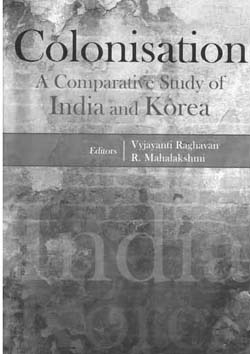
Colonisation: A Comparative Study of India and Korea edited by eminent scholars Vyjayanti Raghavan and R. Mahalakshmi is a timely study of the colonial experiences of the Indian subcontinent and the Korean Peninsula.


Reviewed by: Skand Tayal
Andrew Small

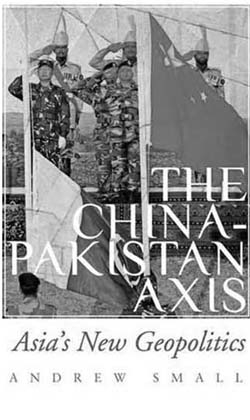
The visit by the Chinese President Xi Jinping to Pakistan in April 2015 saw repeated references to some clichéd phrases describing Sino-Pak relationship, like ‘all weather friendship’. Some new linguistic coinage emerged, such as, ‘visiting brother’s home’ and, ‘security for one as stability for the other’.


Reviewed by: Raghavendra Mishra
Ian Barnes

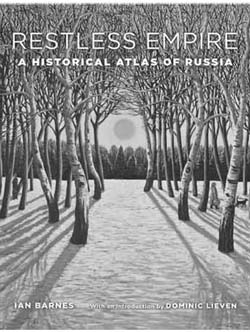
For an accurate, quick, synoptic as well as visual history of Russia, there could not have been a better book than Ian Barnes’s Historical Atlas of Russia. Barnes explains the diversity and complexity of Russia from the origins of Russian statehood to the contemporary Russian Federation under the Putin regime with all its pluralities and enigmas. Critics might question such a work for being unable to do justice to such a long period.


Reviewed by: Anuradha Chenoy
Robert D. Crews

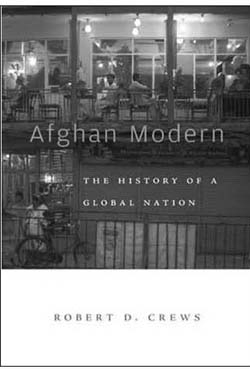
Robert Crews of Stanford University’s Department of History has penned an unusual narrative about Afghanistan, dispelling the negative portrayals of it—as an anachronistic, unchanging, primitive, and ethnically divided ‘graveyard of empires.’ From a rugged, variegated transit territory, it was cobbled into a country two and a half centuries ago.


Reviewed by: Jayant Prasad