Nevertheless, as studies on British colonialism in India quintessentially sought to figure out the transition of non-European countries under colonial dominance, British engagement with plants and their medicinal value became too marginal to find mention in scholarly enquiries.
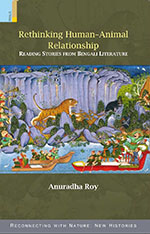
The work was initially undertaken as a project that was part of a research programme in Jadavpur University on the environmental history of South Asia.
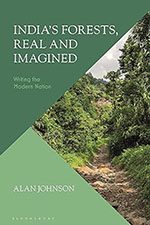
That an academic book on literary representations of Indian forests provides a searching examination of Indian nationhood in the last 150 years makes it already a remarkable work of criticism; that its vantage—the forests of India—also yields a kaleidoscopic view of India’s diverse and ancient past of ecological engagement makes Alan Johnson’s India’s Forests an invaluable work of literary and environmentalist historiography. In an excellent, wide-ranging introduction
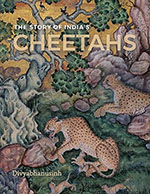
The Story of India’s Cheetahs by Divyabhanusinh Chavda has been written with the intent to arouse interest in the animal and to create an awareness about the Cheetah reintroduction programme.
Disability is born out of interactions of these impairments of mind and body with the external settings comprising the physical features present in the environment and the human components coupled with attitudes and perspectives.
The way he was described by the media defined the way all young offenders came to be caricatured in the society at large, which led to a further outrage against juvenile justice law in the country,