Anees Salim

In yet another riveting piece of literature, Anees Salim revives the theme of death as perceived by a young adult protagonist. The bellboy consistently maintains the ever-imposing doom of death by suicide and/or accident seen from a safe distance of ‘forced indifference’. During the course of the novel, we see the keen observer of deaths, Latif, turn into an amateur anthropologist who starts making mental notes of suicides in Paradise Lodge.


Reviewed by: Suman Bhagchandani

Terry Eagleton

Yet another book on critics and criticism by Terry Eagleton, the most celebrated among the present-day cultural and literary critics of Britain! And it is a book on the heroes of a bygone era as well.  Surely another book on TS Eliot, IA Richards, William Empson, FR Leavis and Raymond Williams—may be with the exception of the last named, who is still regarded as a guru of the prevailing cultural studies approach—will likely have as few takers as, for instance, another book on the English novel from Dickens to Lawrence.


Reviewed by: Himansu S Mohapatra
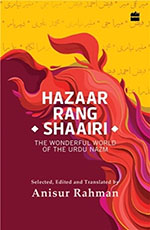
Anisur Rahman

Reporting on the stupendous footfall at Jashn-e-Rekhta recently, The New York Times reported, ‘That 300,000 people celebrated Urdu verse during a three-day festival was testament to the peculiar quality of language in India’ and the report was titled, ‘Where Romantic Poetry in a Fading Language Draws Stadium Crowds’. Even though Urdu poetry, in its entirety, is indeed not romantic, yet every time it is mentioned, it invariably invokes the idea of romance.


Reviewed by: Nishat Zaidi
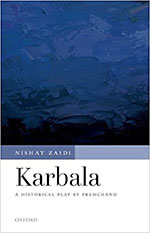
Premchand

Karbala: A Historical Play, was written during the second half of 1923 and published in 1924: a period of great significance in the history of India’s struggle for freedom. The writer, Munshi Premchand, also a man of significance, was a well-known Urdu and Hindi writer. Perhaps there is nary a child in India, or a man of some intellect, who has not read his Godan, the greatest Hindi novel of modern Indian literature written in 1936, and Eidgah, a well-known story published in 1933.


Reviewed by: Syed Ali Nadeem Rezavi
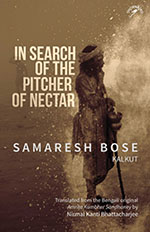
Samaresh Bose (Kalkut)

The Kumbh-mela is one of the major Hindu religious pilgrimages and festivals. It is celebrated in a cycle of approximately twelve years, to commemorate every revolution Brihaspati (Jupiter) completes, at four river-bank pilgrimage sites across India: Prayagraj or Allahabad (at the confluence of the rivers Ganges, Yamuna, and Saraswati), Haridwar (Ganges), Nashik (Godavari) and Ujjain (Shipra). The mythological story goes that after the churning of the ocean, the gods found the nectar for immortality


Reviewed by: Somdatta Mandal
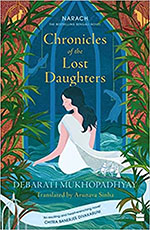
Debarati Mukhopadhyay

Happily, over the last few years there has been a boom in English translations of Indian language literatures. Among other publishers, HarperCollins India has been bringing out interesting books from different regions of India, focusing on contemporary fiction in various Indian languages.  Chronicles of the Lost Daughters, a translation of Debarati Mukhopadhyay’s Bengali novel Narach, is part of this exciting exercise. In the hands of Arunava Sinha, one of our best translators, this critique of 19th century Bengal comes alive in English as a gripping, engrossing text.


Reviewed by: Antara Dev Sen