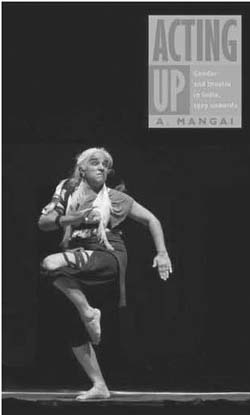
When Natalie Zemon Davis wrote The Return of Martin Guerre (1983), a book just over 150 pages, it became influential in professional history circles because, its brevity notwithstanding, it cut the barbed-wire fence which separates history from storytelling. Davis’s book is unusual in being wonderful as both story and history.
1987
For several years I taught a history course on ‘Social Formations and Cul- tural Patterns of the Ancient and Medieval World’ at Hans Raj College, University of Delhi. This was a B.A. Honours ‘survey’ course (which is still part of the syllabus, although in a modified form), intended to give to students a general understanding of the early and premodern history of humankind—including themes such as evolution, transition to food production, the Sumerian civilization, ancient Egypt, Graeco-Roman antiquity, and emergence of feudalism in early medieval Europe.
The World Outside My Window comprises three sections: The Wonderful World of Insects; Birdsong in the Mountains; and The Loveliness of Forms. The running thread in all these essays is the chain of life and that each creature or plant, no matter how small and insignificant or destructive they might be, remove them and the chain that binds us collapses. Bond through his direct, simple way is sensitizing us to appreciate and give space to everything around us.
My Favourite Nature Stories is a charming volume of twenty-one stories, some have already been published, some are new pieces and some have never been published. Ruskin Bond dedicates the book to all who ‘cherish the green world of India, its forests, fields, streams and sacred rivers.’ The stories cover a range of subjects and locales, but it is the Himalayan landscapes that are perhaps dearest to him. It is a pleasure to read Bond as his language is direct and uncluttered and yet evokes the world around him. The essays are of the moment, like a Zen poem and in those few pages, a sunlit world is vividly brought to life.
2015
The depiction in the story A Little Lie by Nilima Sinha veers towards the latter stance as the protagonist Sunny takes the decision to not-to-lie too literally. It accounts for the leaps in the narrative and fractures the coherence of the text.
the story, The Stranger We Love by Girija Rani Asthana, has a refreshing representation. It tries to overcome the hackneyed depictions of old people and presents a bunch of young children who befriend the old couple who have recently shifted to their neighbourhood. The highlight of the story is how the ‘stranger’ transforms into Dadu for the children and they immensely enjoy spending time in the house of their new friends.