G.N. Saibaba

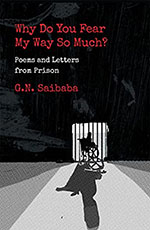
Having perused GN Saibaba’s recent collection, Why Do You Fear My Way So Much?: Poems and Letters from Prison over the last few days, I’m filled with grief and sadness. The UAPA (Unlawful Activities [Prevention] Act), under which GN Saibaba has been arrested, is a draconian colonial law, and will hopefully be revoked in the years to come, but one cannot overlook the damage it has caused in present times. I am thinking of fellow dissenting voices, scholars (Anand Teltumbde, Umar Khalid), Professors (Shoma Sen, Hany Babu), poet (Varavara Rao), and human rights activists (among others, Rona Wilson, Gautam Navlakha, Sudha Bharadwaj, deceased Stan Swamy), who have been incarcerated.


Reviewed by: Shamayita Sen

Myanmar gained Independence on 4th January 1948, less than five months after India.  For both countries, therefore, this year marks the 75th year of Independence. Even before its Independence, Myanmar, then called as Burma, was a province of the British Empire in India and was ruled from Delhi till 1937 when it was made into a separate entity directly administered from London.


Editorial

The origins of the current impasse in India-Pakistan relations are generally dated back to 2016 and since that year the relationship has descended progressively to even lower plateaus. The milestones of the process are well known. One dimension was major terrorist attacks such as at Uri (2016) and Pulwama (2019). Indian Counter Terrorism responses included a shallow cross LOC raid termed as a ‘surgical strike’ in Pakistan-controlled territory and a deeper air strike into Pakistan—the Balakot strike


Editorial

The Liberation of Bangladesh in 1971 is one of the historic moments in the subcontinent’s history as the numerical majority decided to separate from the numerical minority. Bengalis supported the idea of Pakistan and were the first one to vote in its favour in the Bengal Legislative Assembly election. It was a Bengali, AK Fazlul Haq, who moved the Lahore Resolution that conceived the idea of separate ‘states’ for the Muslims in the North-Western and Eastern parts of the subcontinent.


Editorial
Firdous Azim

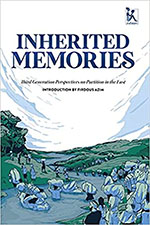
In the last decade, there has been a palpable shift in discussions around the 1947 Partition of India and Pakistan. Renewed interest has inspired writers to conduct oral history interviews of people who lived through the period when borders were drawn to carve out the two dominions. The works of Devika Chawla, Anam Zakaria, Aanchal Malhotra, and Kavita Puri are cases in point.


Reviewed by: Sumallya Mukhopadhyay
Ananth Krishnan

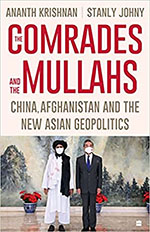
One of the most momentous events of 2021 was the quick withdrawal of the American troops from Afghanistan. The irony of the event was that after spending two decades in Afghanistan fighting to eradicate the Taliban, the United States was unable to do so. When the United States withdrew from Afghanistan in 2021, it was the Taliban which was on the path to establish the new government. The authors argue that Afghanistan was the new Vietnam for the United States.


Reviewed by: Gunjan Singh