
Janaki Lenin
We are fast moving towards an era when we look to admire tigers in faroff forests, enjoy the antics of monkeys in zoos and fish in glass bowls.
Reviewed by: Divya Vasudev

We are fast moving towards an era when we look to admire tigers in faroff forests, enjoy the antics of monkeys in zoos and fish in glass bowls.
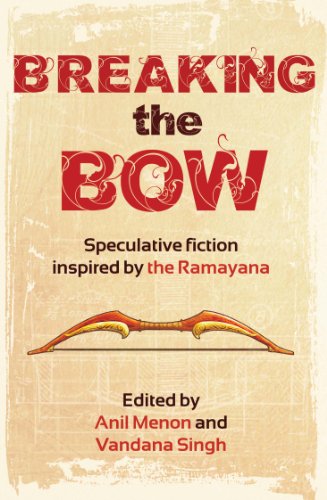
When asked to review the book Breaking the Bow: Speculative Fiction Inspired by The Ramayana, I was initially quite excited. The reasons were many, but primary was the fact that due to the interest of my four-year old daughter in Indian mythology, I had been reading the Ramayana almost every night with her, telling her the story of ‘Ram-Sita’.
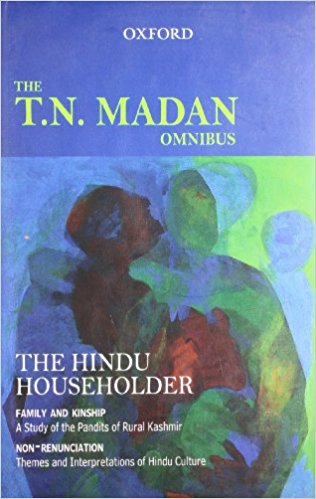
The work of Professor T.N. Madan is in the league of classical sociology in India, which echoes the issues that heralded the Lucknow School of Sociology in mid-twentieth century. Though there has been considerable discomfort in dubbing it a school of thought Lucknow did play a key role in the early sociology of India.

Chamars have emerged as an important political category capable of influencing larger electoral consequences in North Indian politics. It has been possible due to the ongoing struggle and movement in over a century inside the group.

As the struggle for self-determination and against oppression is being waged in Central and East India, this book is a timely contribution. It is a useful compilation of the different policy briefs and declarations by indigenous people, United Nations and international finance institutions (World Bank and Asian Development Bank) on the rights of indigenous people in the past two decades.

What is the relationship between the public histories of societies and movements, and the personal stories of individuals who participated in them, shaped their direction, and witnessed their transformation? Is there an aspect of history which we can access only through tracking the trajectories of an individual’s thinking and action? These questions are particularly pertinent in the case of political movements that possess a strong ethical orientation.