By Yigal Bronner Edited by Yigal Bronner, Whitney Cox, Lawrence McCrea

Originally published in 2011, and now available in an excellent Indian edition, this set of essays in honour of and in dialogue with the ideas and writings of one of the most challenging and demanding scholars of our times is exciting, at times difficult and even arcane, and almost invariably thought provoking. Organized around five themes that have been central to Sheldon Pollock’s prolific and profound scholarship, the essays range from the densely and often dauntingly specific to more broad and general explorations, offering something for almost any scholar interested in the relationship between the past and the present, between literary cultures and the worlds in which they circulate as well as the worlds they construct, between linguistic, scholarly and literary traditions and realms of power.

Reviewed by: Kumkum Roy
By Shereen Ratnagar

An enormous amount of scholarly writing exists on the Harappan civilization. Shereen Ratnagar herself has produced a number of important books on the subject. So why another one? For one thing, the information on South Asia’s oldest civilization continues to grow steadily, and new evidence requires rethinking. Further, as Ratnagar tells us in the Preface, it is time ‘to put the pieces together and to conceive of the entirety of Harappan archaeological remains in terms of a mode of cultural organization, a kind of society, and a set of economic patterns, thereby putting some flesh on the bones.’ Ratnagar’s is not a routine overview. Apart from rich empirical detail, a lively critical perspective runs through the book, one which reflects on archaeological method and interpretation in order to question several hypotheses and stereotypes, not only about the Harappan civilization, but also about the larger Indian past.


Reviewed by: Upinder Singh
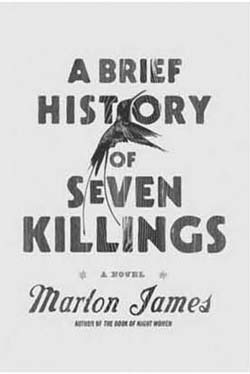
Marlon James

This is one of the most misleading titles I have ever come across. The book is neither brief, nor is it the story of seven killings with its suggestion of serial murders. Very briefly, at the most superficial level, it narrates the story of Bob Marley, the Jamaican reggae singer, the target of an assassination attempt in the 1970s.Bob Marley is referred to as the ’Singer’ in the book and the assassination attempt on his life is touched upon constantly. But for what purpose? Not clear in the story which is confusing, chaotic and kaleidoscopic.


Reviewed by: Meera Rajagopalan
Oliver Sacks

Oliver Sacks, who is the author of a dozen books on the neurological mysteries stemming from impairments of the brain resulting in odd, un-understood behaviours, is known by the lay public primarily through the movie, Awakenings, based on his work with patients who were survivors of encephalitis lethargica. The so-called ‘sleeping sickness’ had killed many thousands in the 1920s and those who survived but had not recovered, were housed in a hospital where Dr Sacks started working in 1966.


Reviewed by: Saleem Peeradina
Salman Rushdie

Reading one Rushdie novel is like reading another. Good fun. You try to see if you can read it in one sitting because you are not too sure even a book mark would convince you where you left off or whether it was even the same book you were reading. Each book now is a blur and is smokey around the edges and seems to be incestuous and promiscuous, melting weak kneed and sometimes penetrating viciously into other books of his (and his own life) and that of others and also all popular cultural texts that have come anywhere near him.


Reviewed by: G.J.V. Prasad
Amitav Ghosh

In an interview in 2012, Amitav Ghosh had described his art thus, distinguishing his writing from that of the historian: ‘History is like a river, and the historian is writing about the ways the river flows and the currents and crosscurrents in the river. But, within this river, there are also fish, and the fish can swim in many different directions. So, I am looking at it from the fish’s point of view and which direction the fish swims in. So, history is the water in which it swims, and it is important for me to know the flow of the water. But in the end I am interested in the fish.’


Reviewed by: Samantak Das