The world ‘dalit’ or “crushed underfoot” in the contemporary period has replaced the world “untouchable”. The term “dalit” owes its origin to the writings of Jotirao Phule in the last decades of the nineteenth century.
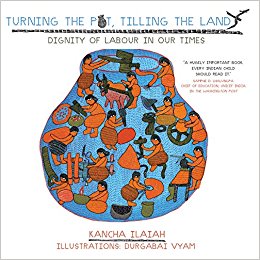
Reading through *Turning the Pot, Tilling the Soil *my mind raced back several winters. I had landed up at a tribal farmer’s house in western Maharashtra, accompanied by a group of Delhi school students who were there for a rural exposure camp.
In the aftermath of the furore created by the implementation of the Mandal Commission Report in the early 1990s, V P Singh had commented somewhere that Indian society was extraordinary in the way it stigmatised those very social groups who created a large part of the material wealth on whose basis we all survived: agricultural workers, artisans and the peasantry.
As the author puts it at the outset, the unifying theme of the twelve essays included in The Republic of Hunger is “the impact on the third world of the new imperialism in the present era, which takes the form of deflationary neo-liberal ‘economic reforms’ and a thrust towards free trade”.
Jan Breman’s enquiries into the world of rural labour in post-independence India are well-known. Much of his work, on this subject, is based on field-studies in the rural landscape of South Gujarat, from the early 1960s onwards.
Almost four decades ago John Rawls presented liberal egalitarianism as a philosophical justification for liberal democratic states. The theoretical premises underlying a general conception of justice consisted of the distribution of all social primary goods – liberty and opportunity,