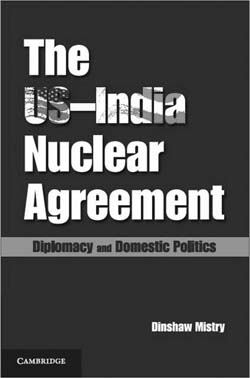
Dinshaw Mistry
The Indo-US nuclear agreement was a watershed in many ways. First, it led to the de-hyphenation of India and Pakistan and their relations vis-a-vis the United States.
Reviewed by: Arun Vishwanathan

The Indo-US nuclear agreement was a watershed in many ways. First, it led to the de-hyphenation of India and Pakistan and their relations vis-a-vis the United States.

Six years after India conducted a series of nuclear tests in 1998, strategy the Indian Army issued its conventional war fighting doctrine called the Indian Army Doctrine 2004. The doctrine, which later came to be known as ‘Cold Start’, drew a lot of attention in the strategic circles.
Both India and Pakistan started their nuclear weapons quest in earnest in the early 1970s, both reached weapon capability around 1990 and both became overt nuclear powers in May 1998.
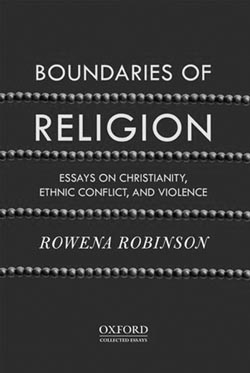
One of the best known authorities in the field of Indian religious studies, Rowena Robinson has written widely on the minority religious communities. Initially, her main preoccupation was with popular Christianity and the theme of formation of Christian identities and how they have been articulated, constructed and reconstructed.
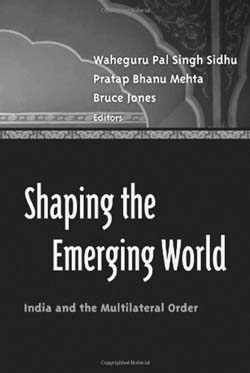
The established wisdom in international relations is that a major state seeking to secure its interests in world affairs has essentially three options to choose from. If it is powerful enough, it can play the geopolitical game of balance of power.
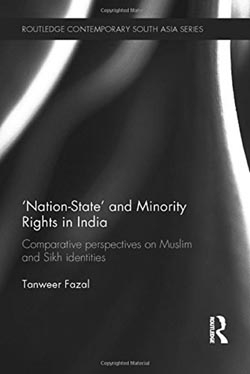
With numerous incidents of what the RSS offshoot, the Dharm Jagran Samanvay Samiti calls ‘ghar wapsi’, (250 Muslim families being reconverted to Hinduism in Agra in November, 2014, and 40 Mazhabi Sikh families who had embraced Christianity being reconverted to Sikhism in Amritsar in December 2014),