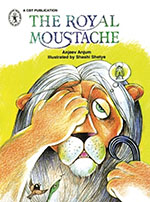
Anjeev Anjum
Anjeev Anjum spins an endearing story about a copycat Lion, King of the Jungle, who wishes to assert his lordship over his subjects in the jungle just like the King of the land does over his subjects.
Reviewed by: Rina Goel

Anjeev Anjum spins an endearing story about a copycat Lion, King of the Jungle, who wishes to assert his lordship over his subjects in the jungle just like the King of the land does over his subjects.
Alien visit, suspense, adventure and some life lessons… a cracker of a book that will enthral any youngster!The names of the characters in this beautifully illustrated, colourful book are as catchy as the story. Ma-Cluck and K-Chick are visiting Earth from their Galaxy ‘Scrambled’.

Let us talk about what big books are. These are large picture-books designed to be shared with young readers by adults around them. By and large they are for pre-primary and primary aged children who are just beginning to enter the world of written texts.How do we use big books? The recommended format is to conduct ‘shared reading’ with children.

Thirteen years ago, a friend brought to my attention a series of reading cards published by Pratham. ‘You must have these in your school library,’ he had insisted and proceeded to procure them for us. I must admit that I was not greatly impressed with these cards, or I should say, the idea of reading cards. I am an avid reader of both fiction and non-fiction and wrinkled my nose at the cards as a substitute for books.
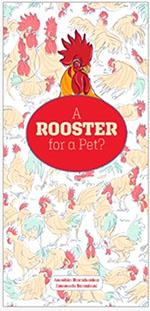
A richly illustrated children’s book written in simple, rhyming verses, A Rooster for a Pet is about a rambunctious rooster who turns the life of the author upside down. Bought by the author’s father, the cuddly ball of fluff soon grows to be a menace in the household, fluttering about the house, getting onto furniture and appliances,
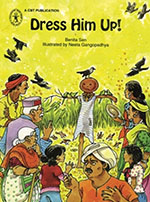
Reading aloud is one of the earliest means by which we share stories with young children and try to inculcate the habit of reading in them. Hearing a story which captures the imagination, provides enjoyment and introduces different emotions and situations and also creates a connection between the adult and the child being read to.