Manas Ray

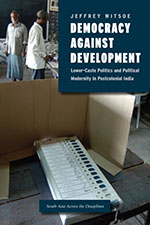
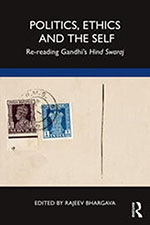
The books under review are actually two accompanying volumes with forty contributors, the genesis of which lies in an issue of the journal Seminar that Manas Ray had edited in October 2015. Both these volumes engage with the concept of democracy in an unconventional manner. They take the reader beyond the realm of a traditional understanding where the concept and idea of a democracy is mostly perceived and discussed as a ‘political system’ with a written Constitution.


Reviewed by: Juanita Kakoty
Devanoor Mahadeva

In the new lows that we have reached in our national public lives, none has been as troubling as the self-imposed silence by many writers on the depredations of the RSS and the BJP.  Of those who do write critically, about the multiple erosions of our democracy and cultures, it is to a consenting audience or as in the English academia it is in the language of liberal social sciences.


Reviewed by: AR Vasavi
Mohammad Ishaq Khan

Mohammad Ishaq Khan’s book, brought out eight years after his death, is a collection of articles published/presented over the years by him. The articles have been selected in order to match the theme of the book. In a time when serious aspersions are cast on the concept of Kashmiriyat, and also when the concept has been gravely abused, the book is an attempt to save Kashmiriyat against such raging tides


Reviewed by: Waqas Farooq Kuttay
Jyoti Mukul

Jyoti Mukul’s debut volume catalogues the ramifications of the nationwide lockdown announced on 24 March 2020; the subsequent shutting down of the Indian Railways which caused emotional turmoil to millions of migrant workers separated from their families amidst dire economic crisis and a health emergency; and the complete breakdown of the healthcare system during the second wave of the pandemic in 2021 leading to a humanitarian tragedy.


Reviewed by: Sampurnaa Bharadwaj
G.N. Saibaba

Having perused GN Saibaba’s recent collection, Why Do You Fear My Way So Much?: Poems and Letters from Prison over the last few days, I’m filled with grief and sadness. The UAPA (Unlawful Activities [Prevention] Act), under which GN Saibaba has been arrested, is a draconian colonial law, and will hopefully be revoked in the years to come, but one cannot overlook the damage it has caused in present times. I am thinking of fellow dissenting voices, scholars (Anand Teltumbde, Umar Khalid), Professors (Shoma Sen, Hany Babu), poet (Varavara Rao), and human rights activists (among others, Rona Wilson, Gautam Navlakha, Sudha Bharadwaj, deceased Stan Swamy), who have been incarcerated.


Reviewed by: Shamayita Sen

Myanmar gained Independence on 4th January 1948, less than five months after India.  For both countries, therefore, this year marks the 75th year of Independence. Even before its Independence, Myanmar, then called as Burma, was a province of the British Empire in India and was ruled from Delhi till 1937 when it was made into a separate entity directly administered from London.


Editorial