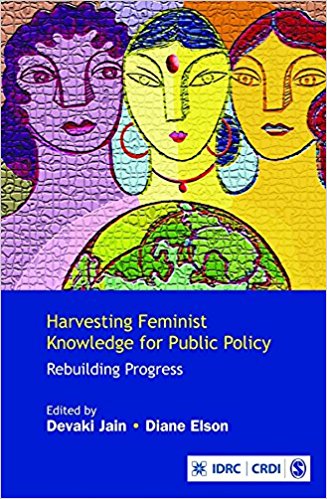
Harvesting Feminist Knowledge for Public Policy: Rebuilding Progress edited by Jain and Elson is a collection of fourteen essays by feminist thinkers across the world putting forward a critique of the current development pattern that has led to the global spate of ‘triple crisis’ of food, fuel and finance.
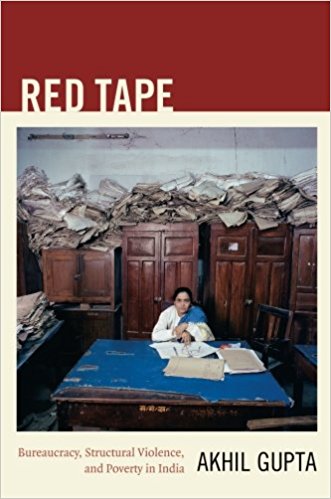
Social science research focused on South Asia has for a long time had a critical shortcoming: the state is almost never an object of study in its own right, but rather studied in conjunction with factors—caste and ethnicity, party competition, regionalism, social movements—in the production of social outcomes.
…given the opportunity, women handle money more efficiently. They have long term vision, they handle money more carefully. Muhammad Yunus
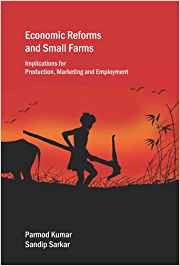
The prolonged agrarian crisis in India since the mid-nineties is reflected by the meager growth rates in the agricultural sector.
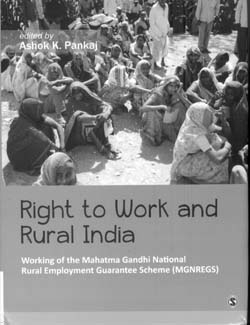
The title of the book in discussion is indicative of the foundational tenet of the volume. The point of departure is to accept ‘right to work’ fundamentally as an issue of justice with reference to the rural communities of India.
Why, in a period of sustained national economic growth, have Indian agriculturalists been committing suicide in such larger numbers? And what might these acts signify with respect to the challenges facing rural India at this moment? These are some of the pressing questions A.R. Vasavi’s Shadow Space seeks to answer. Through six closely related essays, each of which takes up a different aspect of this crisis, Vasavi contends that the suicides express the marginalization of vulnerable agriculturalists within a political economy that has neglected their welfare. In laying out this argument, Vasavi has produced a work that is both meticulously researched and passionately argued—one that is indispensable for understanding the momentous shifts currently underway in Indian agriculture.