Although the subtitle of the book places its subject squarely within Pakistan, I should like to start with two events, separated by nearly two decades, which took place in India. In 1989, the Sangeet Natak Akademi organized a theatre festival in New Delhi to celebrate Nehru’s Birth Centenary.
2006
The book under review is topical in that discussions on education are both neverending and never seem to go out of fashion. For example, one only needs to recall that the United Nations Educational Scientific and Cultural Organisation (UNESCO) just launched its 2006 ‘Global Report on Education for All (EFA) by the year 2015’,
Women experience violence in myriad forms and changing political, social and economic structures have a deep impact in the way violence against women reconstitutes itself. Such violence brings forth complex realities and permeates all categories of women though the nature of violence would differ between different groups, classes and in different times.
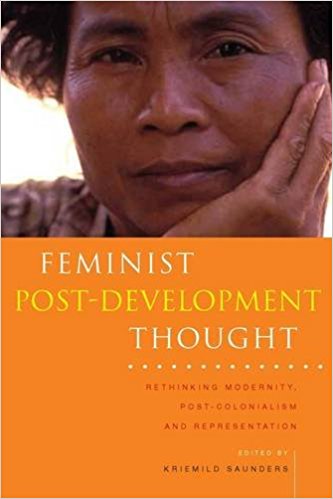
The place of women in development praxis has always been con- tested and troubling. This volume opens out the complex feminist debates in different geographic locations, simultaneously placing before us difference in feminist theorizing and the critical feminist engagements locally and globally with hegemonic forces of development especially over the past three decades.
C.D. Narasimhaiah is more of an institu- tion than anything else. It is not easy to come across ‘a mere village shopkeeper’s son’ (p.11) going on in the 1940s for an English Tripos at Cambridge
The book under review is the outcome of a Herculean task of reviewing the status of both pure and interdisciplinary disciplines of the social sciences in Pakistan. The review has been done on the basis of quantitative growth, qualitative development and identification of the factors that limited or fostered the disciplines. Without following any chronology of the development disciplines the editors have collected the articles on different disciplines randomly.