The former has a story line that will sound familiar to readers of Malayalam fiction revolving round ancient joint families (tharavad) with rivalries, vengeance, curses and mental illness running in the family for generations. It is a dark world of collective guilt which has its roots in the feudal past of rampant criminality and treachery which refuses to be exorcised, despite retellings in every medium from folk-ballads to celluloid dramas.
An interesting one titled ‘Shhh’ is about his grandmother who handed him a spiky shell before she died. She, the wife of one of the native officers in the Malabar Special Police, along with her small daughter, had gone out of curiosity to see Gandhiji. There were milling crowds but all he did was to raise his finger to his lips, and everyone went silent. The soldier who was on guard came and stood in front of the lady at which the crowd felt disturbed. She bent down and picked up something. Gandhiji caught her eye and signalled that she should leave. The crowd parted and she went home.
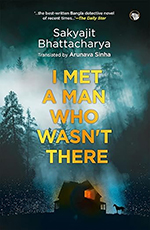
She is an investigative journalist who writes a column on closed cases. The case she has picked up this time is of the murder of Amitava Mitra, a popular poet of his times. The prime accused was the dead man’s friend Arun Chowdhury, but he was released for lack of evidence. The case has remained unsolved and lies buried in police archives for the last four decades.
2025
One of the techniques that Alkazi uses to honour his side of this bargain is to frequently recreate whatever has happened in a kind of mental action replay by his chief detectives so that the reader is also reminded of all the variables that are colliding in this labyrinthine plot. As Fernandes suggests, ‘Re-enter the scene imaginatively in a way, and it is amazing how much detail you will recall.’ What makes Alkazi’s mystery novel so fascinating is that each time this happens, a vivid picture does emerge but with a twist.
‘Cry of the Sky’ by Bhura Singh Kaler is a poignant documentation of Dalit silence and marginalization. ‘My Story, Everybody’s Story’ by Prem Gorkhy is the most ideological in its fictional intent. Underlined by a palpably Marxist tone and texture, it goes on to etch the contours of socio-sexual inequities that, within the context of multiple hierarchies, create a spectrum of mutually hostile caste situations. ‘Gaurjan’ by Ajmer Singh Sidhu, the last story in this collection,
The translator says: ‘Let me warn you, it’s not just mispronunciations, but a few misspellings too that have crept in on purpose, such as Idyaniketan for Vidyaniketan, Ishvodaya for Vishvodaya, Enkateswara for Venkateswara, haeroplanes for aeroplanes, rishckaw for rickshaw, otel for hotel, iskool for school, kilas for class, etc. In addition to aiding the tone and humour, my intention was to represent how words are sometimes regurgitated solely by their sound, and how pronunciation tends to morph as it travels across class, region, age or education…. This is just to remind the reader that these stories come from hinterland, where the colloquial idiom is typically a mixture of languages and cultures.’