Carl W. Ernst

With Sufism being viewed as a counter narrative to radical Islam, there is a renewe interest in this mystical aspect of Islam, particularly of Sufi traditions in the subcontinent. These three books published recently highlight the cultural, historical and spiritual legacies of important Sufis in the subcontinent. Shaykh Usman Ali Hujwiri is popularly known as Data Ganj Baksh. Beginning with Data Sahib’s arrival in Lahore from Ghazna in the eleventh century, Sufi philosophy began to impact both the intellectual and social life of Muslim communities.


Reviewed by: Sadia Dehlvi
Linus Strothmann

With Sufism being viewed as a counter narrative to radical Islam, there is a renewe interest in this mystical aspect of Islam, particularly of Sufi traditions in the subcontinent. These three books published recently highlight the cultural, historical and spiritual legacies of important Sufis in the subcontinent. Shaykh Usman Ali Hujwiri is popularly known as Data Ganj Baksh. Beginning with Data Sahib’s arrival in Lahore from Ghazna in the eleventh century, Sufi philosophy began to impact both the intellectual and social life of Muslim communities.


Reviewed by: Sadia Dehlvi
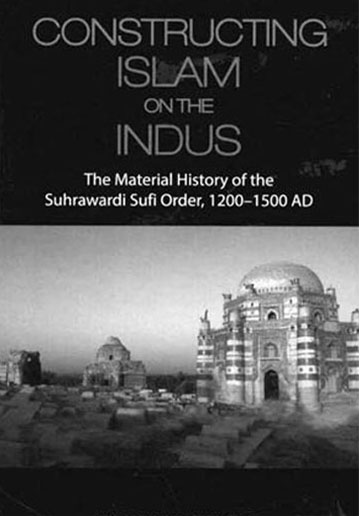
Sekhar Bandyopadhyay

Decolonisation and the Politics of Transition in South Asia consolidates the debate concerning the transfer of power in South Asia, and maps the trajectories of the early postcolonial state in the region. Some of the essays in this volume are old and have stood the test of time. In fact, historians of my generation grew up with them in the last couple of decades.


Reviewed by: Ritajyoti Bandyopadhyay
Amiya P. Sen

The book under review, a representative selection of the writings of Sister Nivedita along with a detailed and perceptive. Introduction by its editor, demonstrates Nivedita’s engagement with the idea as also what then posited as the contemporary reality of India.


Reviewed by: Gangeya Mukherji
A. Banerjee

India’s national movement was special because it possessed social,economic and environmental dimensions in addition to the political goal of Independence. And special among its participants was Joseph Cornelius Kumarappa, born in 1892 into a talented family of Tamil Christians originating, close to India’s southernmost tip, in Palayamkottai.


Reviewed by: Rajmohan Gandhi