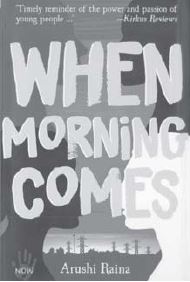
Dystopian fiction begins quite simply with restrictions. A character is not allowed to do something because that would mean defying society, family and the law. Even though Arushi Raina’s When Morning Comes is based on the reality of life in apartheid-era South Africa, it has all the trappings of a good young adult dystopian novel.
Ruskin Bond is one of India’s favourite writers. He has been writing for over five decades, and his repertoire is impressive—poetry to non-fiction, he seems to have written it all. What makes Bond loved and admired is his simple narrative style which draws you in and takes you on a walk along with him past streams, mountains and the odd city road. There’s so much to see and admire, beauty even in the smallest wayside weed.
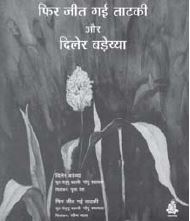
Both the stories are set in the tribal areas of Andhra Pradesh. Balamma is a spirited 12-year-old girl. She reaches her peanut farm at the crack of dawn before any one is up and waters her peanut crop. When the neighbouring field of the landlord Tirumalla Rao gets less water, the annoyed landlord decides to teach Balamma a lesson.
Young children play in the most unstructured manner. A child holding a ladle may decide she is holding a mike and singing a song. Moments later, the ladle becomes an umbrella, or a bus, or a spoon to stir her mother’s coffee. A game of swordsmanship may transform into one playing with fallen flowers and seeds, or a classroom game.
The genre of young adult literature is hard to define. It is one that is identified by its liminality (to borrow a term from postcolonial theory), by its existence as an in-between segment of storytelling—neither too innocent, nor too indecent.