Sekhar Bandyopadhyay

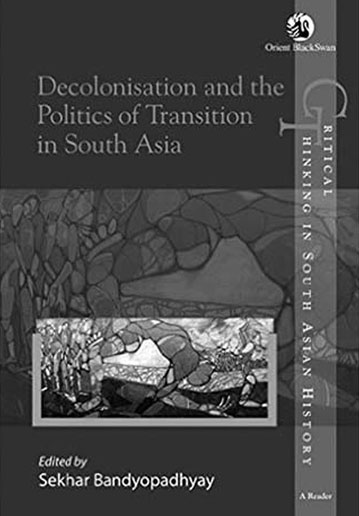
Decolonisation and the Politics of Transition in South Asia consolidates the debate concerning the transfer of power in South Asia, and maps the trajectories of the early postcolonial state in the region. Some of the essays in this volume are old and have stood the test of time. In fact, historians of my generation grew up with them in the last couple of decades.


Reviewed by: Ritajyoti Bandyopadhyay
Amiya P. Sen

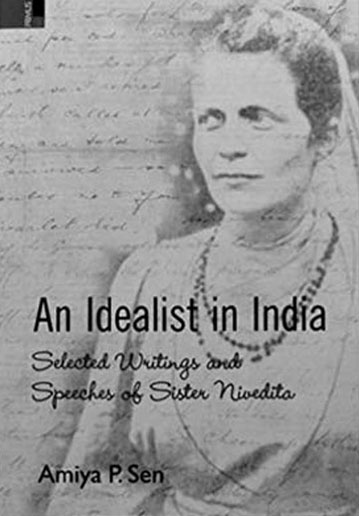
The book under review, a representative selection of the writings of Sister Nivedita along with a detailed and perceptive. Introduction by its editor, demonstrates Nivedita’s engagement with the idea as also what then posited as the contemporary reality of India.


Reviewed by: Gangeya Mukherji
A. Banerjee

India’s national movement was special because it possessed social,economic and environmental dimensions in addition to the political goal of Independence. And special among its participants was Joseph Cornelius Kumarappa, born in 1892 into a talented family of Tamil Christians originating, close to India’s southernmost tip, in Palayamkottai.


Reviewed by: Rajmohan Gandhi
Sabyasachi Bhattacharya

Just when one thought that studies on colonialism has reached a significant milestone, Sabyasachi Bhattacharya’s book brings in a timely message that a comprehensive analysis of the colonial state is yet to be put down on paper. In his book The Colonial State: Theory and Practice, Bhattacharya claims that this has always been a subject that has been shoved aside to the scholarly margins and therefore, now, merits greater attention.


Reviewed by: A. Gangatharan
Namrata Ganneri

2016

The monograph on Peter Peterson (1847–1899) by Namrata Ganneri is a part of a larger project undertaken by The Asiatic Society of Mumbai with the objective of publishing a series of monographs on the Founders and Guardians of the Society.


Reviewed by: Madhavi Narsalay