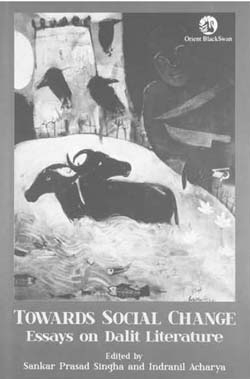
Although this is yet another volume on dalit writing which adds to the burgeoning dalit discourse, it is welcome because dalit literature constitutes an important segment of postmodern literature in India in particular and is a prominent literary site in the South Asian context in general.
Inclusion and exclusion are two contradictory processes which coexist in both the developed and developing countries. The widening gap between rich and poor across the world is an instant example of exclusion.
‘Nearly every book’, George Orwell famously wrote in 1946, ‘is capable of arousing passionate feeling’—feeling which may range from ‘passionate dislike’ to equally passionate admiration—in the mind of the reader (George Packer [Comp.] George Orwell: Critical Essays, London, 2009, p. 290).
Innovations in Maternal Health: Case Studies from India (2014) edited by a team of researchers from the Public Health Foundation of India (PHFI) describes a series of interventions which aim to improve maternal health among some of India’s poorest communities.
The study of masculinity as a distinct area framing and being framed by cultural and collective practices rather than as a binary of gender is a relatively recent phenomenon within the academic discipline of gender studies.
2015
Indians who travel abroad or migrate internationally rarely write about the societies they intimately encounter and adopt as ‘home’. Contrastively, from the time of the colonial era, western writers have produced a copious and authoritative body of travelogues, fiction, and scholarship on the Indian subcontinent.