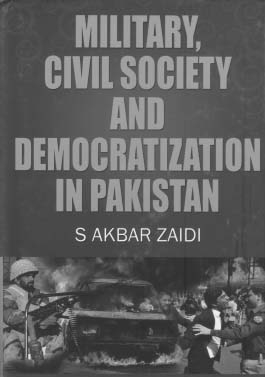
Akbar Zaidi’s book on the relationship between the military, civil society and political parties in Pakistan is primarily a compilation of what he has written in the past on the impact of militarization on his country’s national life.
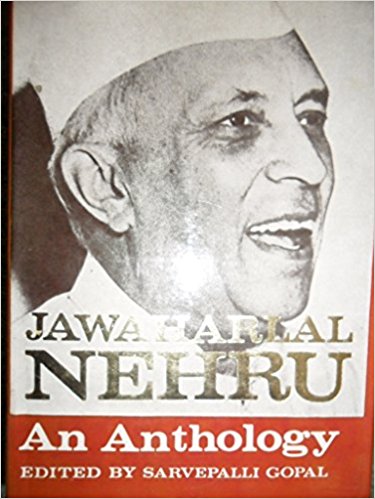
Anthologies of the writings of a single individual of this type are rare; either they are collections of admonitory sayings with a political purpose on a much briefer compass like Mao Tse-tung’s Red Book or varied selections of the utterances of the great man concerned on a particular topic spread over the years.
‘SARVODAYA’ movement launched by Mahatma Gandhi and pursued by others like Vinoba Bhave and Jayaprakash Narayan in India, and A.T. Aryartne in Sri Lanka, has attracted the attention of scholars an over the world.
Are the Pakistani people faced with a devil-and-the-deep-sea choice: condemned to live forever in backwardness and anti-democratic mould, of remaining permanently in a feudal set-up or going the Taliban way?
The contention that modernization of the agrarian sector is a precondition for economic growth and development is not a mere claim. It is an irrefutable fact which the economic history of the present day advanced countries has admittedly established.
Maleeha Lodhi’s edited volume is one of the few books that Pakistan military’s Inter-Services Public Relations’ head Maj. General Athar Abbas recommends to his visitors. The value of this book for Pakistan’s armed forces and establishment is that it presents Pakistan as ‘beyond a crisis state’. The basic thesis of the volume…