
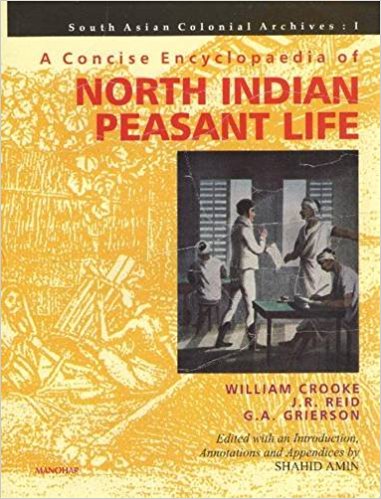
William Crooke, J.R. Reid and G.A. Grierson

Since the beginning of colonial expansion in the late eighteenth century a wealth of material has been generated by colonial administration and scholars. This documentation has often formed the base material of the writings of future historians, and often provides us the only non-vernacular account of local practices and beliefs.


Reviewed by: Archana Prasad
Ushba Publishing

Agra Summit and Beyond a collection of essays, interviews and personal remembrances of the Agra summit, undoubtedly an important event in Indo-Pak relations, in the recent years. Khalid Mahmood covers the road to Agra and the events that took place during the summit meeting in a chronological sequence on who said what and on which date. His essay also covers major opinions published in leading dailies.


Reviewed by: D. Suba Chandran
Sumantra Bose

This book deals with some of the major heartlands of ethnic conflict in today’s world—Israel-Palestine, Kashmir, Bosnia, Cyprus and Sri Lanka.


Reviewed by: Udayon Misra
A. Rahman

On a visit a decade ago to Nanniwan, a remote village in north-western Shaanxi Province in China, the reviewer was surprised to find a spinning wheel, charkha (much like the Gandhian model) in the museum there.


Reviewed by: Srikanth Kondapalli
Srirupa Roy

The postcolonial compulsions to grapple with or outgrow the memories and legacies of colonialism have produced a teasingly rich body of writings. If colonial experience called for negotiations and repudiations, their postcolonial interrogations have re-visited those sites for new answers and new fulfillments.


Reviewed by: B.Surendra Rao
Bharati Ray

Women of India is an important volume, not only because as editor Bharati Ray has to gathered in one place essays by almost all the important gender studies scholars in India, but also because it seeks to put into one text all the imaginable aspects of the history of women in modern India.


Reviewed by: Prathama Banerjee