Meenakshi Thapan
According to The World Migration Report almost 50% of all migrants are women. This process termed as ‘the feminisation of migration’ has been rightly become the focus of many researches.
Reviewed by: Kalpana Vishwanath

According to The World Migration Report almost 50% of all migrants are women. This process termed as ‘the feminisation of migration’ has been rightly become the focus of many researches.
The writing of ‘women’s history’ has been closely related to the women’s movement and feminist practice. Since the 1960s, feminist scholars have challenged the methodology of conventional historiography and have altered its contours and research tools, perhaps with greater success than in the case of any other discipline.
The collection of essays entitled Culture Power and Agency, Gender in Indian Ethnography with an incisive introduction by the editors will be an asset to any library or personal collection. The authors contributing to the volume have carefully presented sound theories that are supported by their elaborate fieldwork.
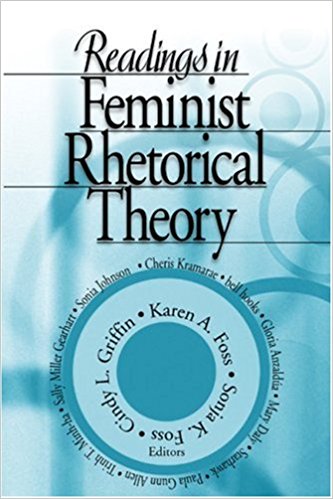
Readings in Feminist Rhetorical Theory—this straightforward title holds out the promise of an anthology that brings together the work of various feminist rhetoricians within its covers. However, the circle of nine names that follows this title on the cover page belies this promise.
Roshen Dalal’s Dictionary is an affordable, well-produced and handy reference-work that is bound to go down well with scholars and general readers alike though judging by the author’s prefatory remarks, it primarily seeks to address the latter.
Carlo Ginzburg, the Italian historian, notes sarcastically in his fasci nating book The Judge and the Historian: ‘For many historians, the notion of proof is out of fashion: like that of truth, to which it is bound with a very solid historical (and therefore unnecessary) link.