Growing up in Pennsylvania during the 1960s, my friends and I used to hang out at a drugstore (that is, a combined eating place, general store and pharmacy) in an outer suburb of Philadelphia. Bolted to the lunch-counter of this establishment was an ancient fortune-telling machine.
2006
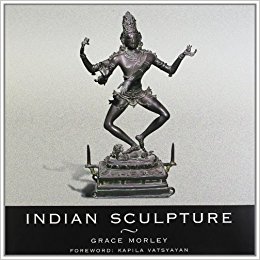
What could one expect an elderly non- Indian, a specialist in modern European and Mexican art to contribute to the creation of a museum of Indian ancient and medieval art? Not much, one would reasonably predict. But Grace Morley proved her critics wrong. Appointed the first director of the National Museum of Art in Delhi in 1960,
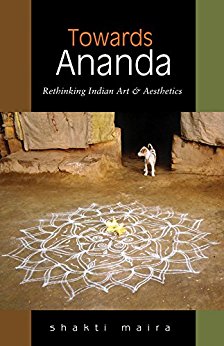
The study of Indian aesthetics came to the forefront following the publication of K.C. Pandey’s work around the mid 20th century but subsequently it suffered from neglect. Several sporadic attempts have been made to revive interest in the subject quite recently. The Journal of Arts and Art Criticism in the mid 1950s had devoted a special issue to Indian aesthetics and had contributed to facilitating a lively debate around Indian aesthetics in comparison with western aesthetics.
This book, with an unusually long title, rounds off the investigation that Wendy Doniger, Mircea Eliade Distinguished Service Professor of the History of Religions at Chicago, launched in 1998 with The Implied Spider: Politics and Theology in Myth (Columbia University Press).
In a strange coincidence, I have recently read two books that present a grand narrative across a vast span of human history. There is a similarity in the approach of Christopher Booker in his Seven Basic Plots, and Karen Armstrong in her A Short History of Myth: prose that seduces with its lucidity, persuading one to accept their elision of particularities, and an engagement with concepts of archetypes.
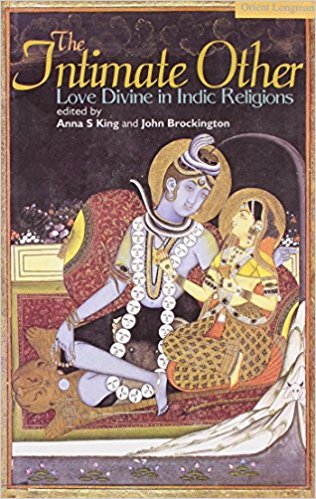
This collection of essays on the devotional element in Indic religions has an interesting history. It arises from an international conference organized by the Dharam Hinduja Institute of Indic Religions, University of Cambridge, which was widely attended by academics, interested lay participants and ‘devotees’.