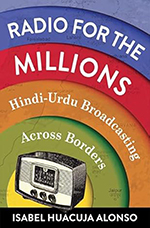
The politics of listening and sounding extends from Pavitra Sundar’s work to Rangan et al’s discussion on accent—common to both is the figure of the xenophone. The interdisciplinary volume on accent draws upon contributions ranging from literature and linguistics to anthropology and media studies—opens up the accent as an unstable element, one that ‘raises questions about power, hierarchy and difference’ (p. 3). Accent, for the volume’s authors and editors
Prashant Panjiar started as a photojournalist in a newspaper and went ahead to do photo assignments for two of India’s prominent newsmagazines when print was the primary medium. He has spoken about his engagement with the changing socio-economic landscape of the Indian subcontinent that he experienced working in print.
Sunil Gupta’s work transcends borders as he brings his diasporic lens to look at issues of gender, sexuality, racial discrimination across continents in India
The third section of essays is ‘Post-cinematic Flows’. The title of this section hints at the changing nature of the cinematic medium and its viewing whether in public, semi-public or entirely private settings and transformations in its circulation and consumption. Madhuja Mukherjee’s essay on balances at play in video making in the Manbhum region of Bengal
After a long ship and plane ride to the other end of the world, Breezy with his sisters, mother and Rama, now his stepfather, arrives in new Bombay that is developing new professions and industries much like the film industry. Rama steps up a motion picture colour processing lab for what was already emerging as the primary form of entertainment, the cinema.
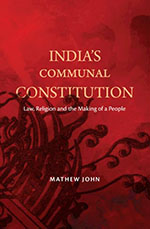
This brings us to John’s fourth issue in the book, that of caste; in discussing the Indian caste system in the fourth chapter, John contrasts the sociological and sacral conceptions of caste. He refers to Marc Galanter’s framework, which had put forward three models of caste—the sacral, sectarian, and associational models. Whereas the sacral conception of caste sees the different castes in India ‘as constituent parts of a unified Hindu religious order’
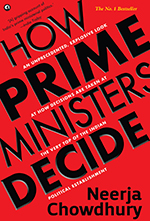
Beginning with a well-analysed nineteen-page Introduction, raising and underlining several issues and processes relating to the office of the Prime Minister, she quotes Atal Bihari Vajpayee saying, ‘The higher you go, the more lonely you are.’ This sets the tone of the analysis that shows a Prime Minister as a human, who attempts to survive amidst competing pressures, aiming to triumph politically. In the process, a VP Singh ends up changing the politics of the country for all time to come despite a short tenure.