Pramod Maithil

This little school in Bhopal, 28 students strong at last count, is one among several such efforts in different pockets of India to make a difference to the way children learn. In this book, the prime mover of Anand Niketan Democratic School, Pramod Maithil, shares the story of the school’s journey so far, starting with why the school was set up in the first place.


Reviewed by: Sandhya Rao
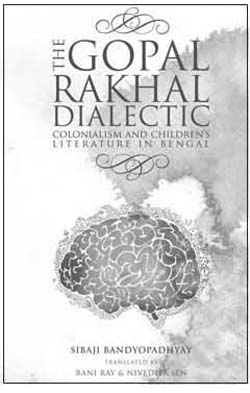
Sibaji Bandopadhyay

Children’s literature in Bengal has a rich history, not unusual since Bengal was in the lead during the 19th century, and even later. The Bengal renaissance had also seen a rich proliferation of literature, including the genre of children’s literature.


Reviewed by: Madhumita Chakraborty
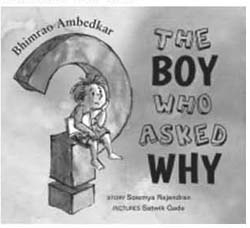
Sowmya Rajendran

Sowmya Rajendran’s The Boy Who Asked Why is an apt choice for a child’s first view of our society and its flaws. The book is meant for children aged 6 and above and is a very simple yet powerful introduction to India’s caste system, hierarchies, discriminatory practices and their repercussions over time. The Boy Who Asked Why is the story of Bhim, born to untouchables in British India.


Reviewed by: Deepa Sankar
Subhadra Sen Gupta

The blurb at the back of Subhadra Sengupta’s A History of India for Children clarifies that it is sufficiently updated with the relatively recent approach to the study of history. ‘History is … about how ordinary people lived—the houses they lived in, the food they ate, the clothes they wore and what the children studied in school … it is the story of our past.’ Such a sensitization has also marked the rewriting of history textbooks in schools.


Reviewed by: Nivedita Sen
Kamesh Ramakrishna

It is so difficult to achieve a combination of the ancient and the modern, the historical and the imaginary, the authentic and the innovative. But in The Last Kaurava by Kamesh Ramakrishna we have it. In it, the Mahabharata comes alive with a twentyfirst century zest.


Reviewed by: Dipavali Sen