Nandini Bhattacharya

2015

Gora in Bengali is considered to be the best novel by Rabindranath Tagore for its epic range. Though written between 1907 and 1909 (when the author was in his forties), the action of the text is clearly set at least thirty years earlier, in the early 1880s and takes into account events that happened even earlier. If one takes into consideration the moment of Gora’s birth, then the action of the narrative should be said to begin from the year 1857. The novel is considered central to the nation question because it captures the Indian nationalist upsurge of the late nineteenth-early twentieth century in all its tragic complexity. Gora is produced in an awareness of Lord Curzon’s proposed partition of Bengal and the consequent crystallization of the Bengal-Indian identity.

Reviewed by: Somdatta Mandal
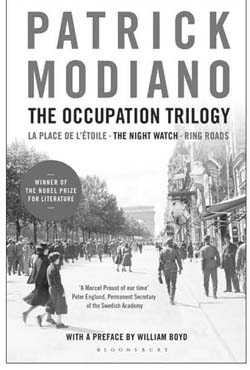
Patrick Modiano

As our journey into the future continues—the present moment drifting away, our own biographies lengthening, our pasts receding inexorably, quietly becoming “history” in the distance— so certain aspects of those retreating eras seem to come more sharply into focus and claim our attention. The longer view allows us to see these features of the recent past as truly defining characteristics of those decades that we lived through.’—William Boyd.


Reviewed by: Semeen Ali
Damon Galgut

Astory about the secret life of a novelist and short-story writer, and a famous one at that, never fails to interest, and this novel does not disappoint. Mainly covering the twelve-year period between 1912 and 1924 when the conception and writing of the classic novel, A Passage to India, took place, Damon Galgut takes us through the repressed life of E.M. Forster, a creature of Empire who was also the victim of its restrictive class, racial and morality norms. Forster’s homosexuality was known among his inner circle but never to his wider audience of readers until his posthumous novel Maurice was released.


Reviewed by: Shane Joseph
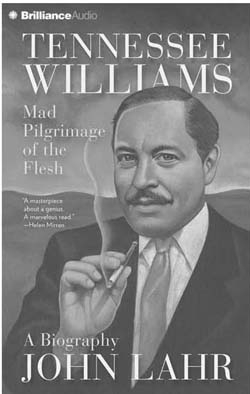
John Lahr

Nancy M. Tischler’s first definitive biography of Tennessee Williams appeared in 1960 when the dramatist had all but exhausted his trajectory of great writing. Tischler’s book entitled Tennessee Williams: The Rebellious Puritan was, in many ways, the first critical appreciation of the great American dramatist’s work. It wove his life—family and background—into his work and tried to offer a psycho-biographical interpretation. Another significant biography appeared in 1985—two years after the dramatist’s death.


Reviewed by: Gulshan Rai Kataria
Albeena Shakil

One’s first encounter with fiction has been generally through the reading of or listening to fairy tales, mystery tales, superhero stories, popular stories, classic love stories and fantasy novels. And while reading and enjoying them we hardly give a thought to how this enchanting form, both long and short fiction came into existence. Defining the novel is a tricky task since it mediates through various forms of art and adapts itself to the demands of the changing cultural milieus


Reviewed by: Kusha Tiwari
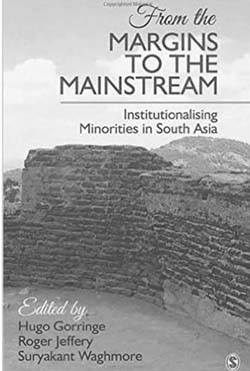
Edited by Hugo Gorringe , Roger Jeffery and Suryakant Waghmore

The process of institutionalizing radical protest politics and their demands include a swathe of dilemmas and complexities that include the possibility of de-radicalizing and blocking the political and collective sense that such politics grounds them on. Thus, radical politics on the one hand wishes to witness institutionalization and mainstreaming of their politics to redefine political landscapes, while on the other, they wish to continue as radical protest politics maintaining the fervour and the process of wedging open social narratives that had little space hitherto. It has often been witnessed that political movements that institutionalize themselves in law, policy, and formal institutions carry the anxiety of deradicalizing themselves. The protests get entangled in legal dilemmas as has happened with the sub-caste politics, where mass mobilization was replaced by technical detailing of who is or is not eligible for reservations, or as has been the case with domestic violence where with 468(a) the issue was individualized, and became a matter of accessing the judiciary,


Reviewed by: Ajay Gudavarthy