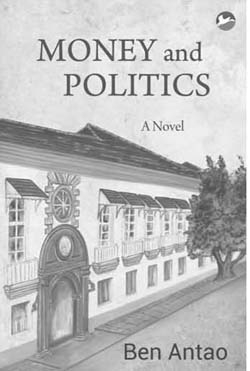
Ben Antao

Ben Antao has tackled the birth of Goan Independence with humour and an unrepentant pen. That politics is money is unquestioned in this novel. That politics is business is also boldly stated. And with the events in this tale taking place in the early 1960s when, for those of us who were raised in a more idealistic time and were led to believe in statesmanship and leadership (Kennedy, Gandhi, Churchill et al), and in altruistic nation-building in a post-WWII era, this book comes as a bit of a shake-up and a wake-up call.


Reviewed by: Shane Joseph
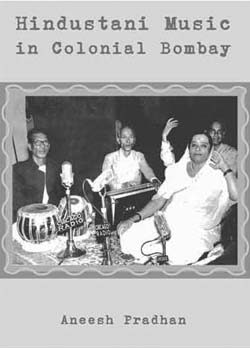
Aneesh Pradhan

‘Dharma Migu Chennai’, ‘Madras is replete with piety’—so the saintpoet Ramalingaswamy pronounced in the nineteenth century. In her excellent account of the social history of music in South India, the historian Lakshmi Subramanian (2006) probes this ‘curious testimonial’.


Reviewed by: Partho Datta
Reshma Valliappan

More than two million people in the United States have a diagnosis of schizophrenia, and the treatment for most of them mainly involves strong doses of antipsychotic drugs that blunt hallucinations and delusions but can come with unbearable side effects, like severe weight gain or debilitating tremors.


Reviewed by: Ammu Joseph
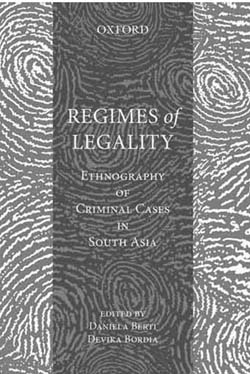
Daniela Berti

It’s about the farcical trial of a Left-wing folk singer accused of instigating a sewage worker to commit suicide in a manhole. India’s official entry for Oscars 2016, a Marathi movie called Court, has earned acclaim for its insightful portrayal of the Indian legal culture. It’s a rivetting story even as it focused on banality rather than the usual fare of dramatic situations and stirring dialogues. In a matter-of-fact tone, the movie brings out the quirks of the judge, prosecutor, defence counsel and the accused person, not only in the court premises but in their personal lives too.


Reviewed by: Manoj Mitta
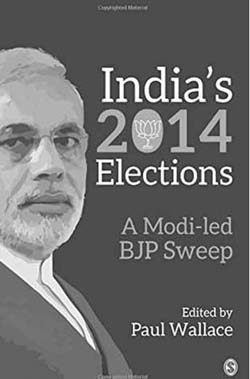
Paul Wallace

The election held in 2014 was significant in many respects. First, for the first time in the electoral history of India, a non-Congress party was able to come to power at the centre on its own, considering the fact that the Janata Party was a conglomeration of parties ‘coming together’ to contest election in 1977. Second, the colossal presence and impact of Narendra Modi as the prime ministerial candidate and chief campaigner of the BJP over the eventual electoral outcome was a reminder of the personcentered campaigns undertaken by Indira Gandhi in the 1970s. Third, it was arguably the first election when the social, electronic and print media seemed to play such an important role in setting the electoral agenda and influencing electoral choices.


Reviewed by: Ashutosh Kumar