This book needs to be appreciated as a culmination of a three ecade engagement with the city of Madurai and a select set of residents who became the author’s respondents and very close friends. These close acquaintances’ lives, their troubles, travails, joys and everyday struggles are tracked in a way that they become the central cast…
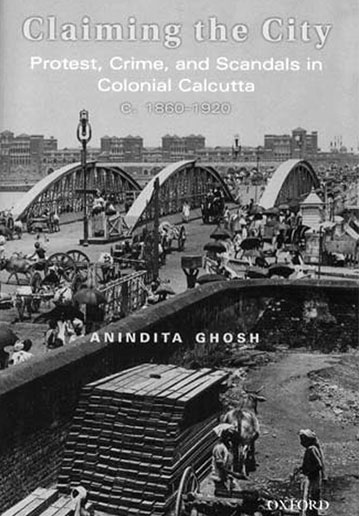
Aquestion calculated to test the mettle of even those intimately familiar with the history of colonial Calcutta—what is common to Mahesh-chandra Das De, Aghor-chandra Das Ghose and Jaharilal Sil? These names will not occur in any roll call of honour but as pamphleteers of urban phenomena such as storms, bridges and fish epidemics, they were nonpareil.
‘The ones who can call themselves contemporary are only those who do not allow themselves to be blinded by the lights of the century, and so manage to get a glimpse of the shadows in those lights, of their intimate obscurity.’ (Giorgio Agamben, What Is The Contemporary?, p. 45)
Secularism in India has always been a contested terrain at both conceptual and practical levels. With the advent of modernity and democracy preceding the wave of industrialization, unlike in the West, it has largely been understood as a peculiar Indian phenomenon distinct from the western secular models.