Reviews of books about an adversary army can sometimes be misleading and biased. Strongly resisting that temptation I read Christine Fair’s 347 page long book with increasing fascination and also discussed it once in a session at CLAWS with Christine Fair herself in the panel of speakers.
Emerging China: Prospects for Partnership in Asia analyses and assesses the rise of China and its impact on Asia’s politics and economy, from the perspective of scholars from various countries—especially India. The book is, accordingly, divided into three sections—Asian Multilateralism, Engaging China, and China-India Equations.
Shishir Gupta says clearly at the beginning that the ‘book is not about China but its policies and mindset towards India as perceived by the top Indian leadership, political parties and the public’ (p. xi). Within this framework he tries to give an organized picture of the ebb and flow of Sino-Indian relations during the UPA regime.
Here is a public figure who was the subject of unbridled encomiums and equally intemperate condemnation, who was at the epicenter of the intensely convoluted politics of the space and time she inhabited, around whom a country’s full-fledged intelligence apparatus claimed to have a ‘rock-solid’ case implicating her and a large network of associated political personalities in a foreign-sponsored conspiracy to foment a coup.
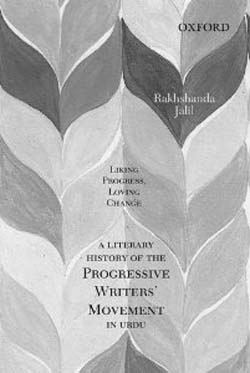
These lines perfectly sum up the lives of two people that played an important role in the improvement of the status of women—Rashid Jahan and her father Shaikh Abdullah or Papa Miyan as he was fondly remembered, by generations of women.
A call by the police on Valentine’s Day in 1989 alerts the British-Indian author that his life is in danger due to a fatwa declared on him by the dying Ayatollah Khomeini over his ‘blasphemous’ novel The Satanic Verses. He takes on the alias Joseph Anton (after Joseph Conrad and Anton Chekov), goes into hiding under protection of the British Secret Service…