Cities in Medieval India, a voluminous anthology, is an outcome of academic discussions on the theme of urbanization in premodern India at two separate colloquia held at the Centre for Historical Studies, Jawaharlal Nehru University, New Delhi between March 2008 and March 2009.
The title of the book immediately raised a question in my mind: how much new information on the maritime trade and ports of Gujarat would be available now, about three decades after the path-breaking work by Das Gupta, Pearson and other historians, and later, by Lakshmi Subramanian? As if in anticipation of this query, Hasmukh Shah…
The editors of Irreverent History begin the preface by stating that ‘the present work celebrates the life and scholarship of Professor Muttayil Govindamenon Sankara Narayanan’. Indeed one of the most celebrated historians of India is offered a bouquet of sixteen essays by scholars, many of them his students.
Inter-Asian connections and linkages have a long and fascinating history, and an equally fascinating historiography. The southeast Asian connections, in particular, have received much attention, having been examined through a variety of prisms, ranging from the ‘Greater India’ idea of the early decades of the 20th century, to Sheldon Pollock’s hypothesis of the ‘Sanskrit cosmopolis’ of the beginning of this century.
George Michell is a Professorial Fellow at the School of Architecture in Melbourne. He has dedicated the major part of his academic career to look at architecture in the medieval Indian context and more specifically at temple architecture.
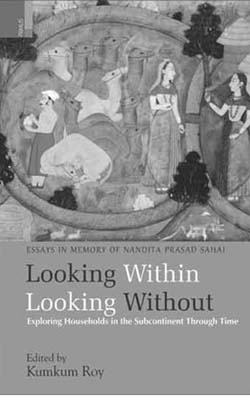
The essays in this volume try to get behind the apparent continuity of normative discourse on the household in India from the ancient to the early modern. They try to locate moments of disruption, transformation or critique, in texts that are often read as simple reiterations of the Manusmriti through the ages.