Major General Abrar Hussain

The book narrates the operational performance of Pakistan’s 6 Armoured Division in the 1965 Indo-Pak war. Pakistan had inducted its Special Services Group personnel in J&K in August1965 to stir an uprising and later launched an offensive in the Chhamb Sector on 1 September 1965. India retaliated by launching an offensive across the Indo-Pak international border in the Lahore Sector on 6 September: India’s Prime Minister Lal Bahadur Shastri had warned—retaliation at a place of its choice.


Reviewed by: A.M. Vohra
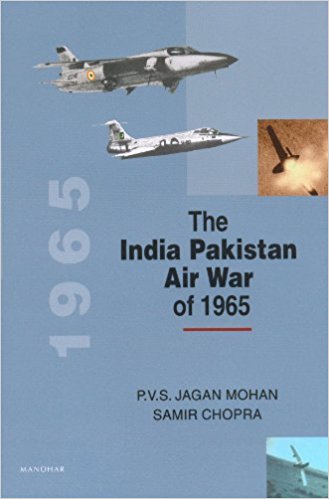
P.V.S. Jagan Mohan

This is one of the rare books on air war in 1965 between Pakistan and India reconstructing history from personal accounts, diaries and interviews. Undoubtedly human memory would be hazy four decades after a war; and this is even more so in the case of air wars where the fog of war is normally much thicker than on land or at sea.


Reviewed by: Jasjit Singh
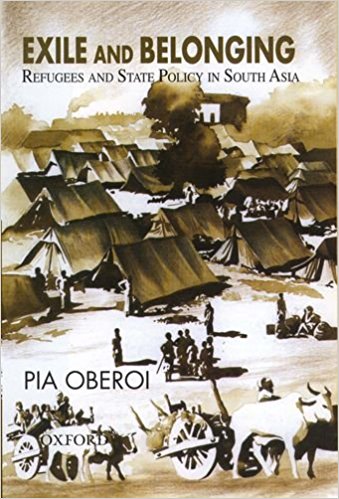
Pia Oberoi

The Indian subcontinent stepped into its independent nationhood amidst the greatest refugee crisis in the modern era, when an estimated fourteen million people migrated across the borders of India and Pakistan. And yet, a theoretical understanding of the refugee phenomenon has evolved much more recently in the1990s. This is especially true of the International Relations literature in the South Asian region that has been dominated by the neo-realist analyses.


Reviewed by: Navnita Chadha Behera
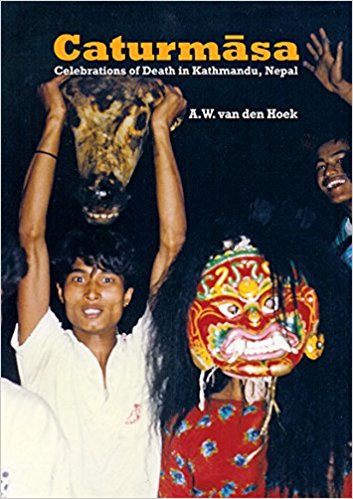
A.W. van den Hoek

This volume is a posthumous publication of what would have been a part of Bert van den Hoek’s magnum opus on the ritual structure of Kathmandu. His untimely death, in a road accident in Mumbai in 2001 while on his way to a conference in Pune, put an end to a project that would have covered various aspects of the Newari ritual calendar.


Reviewed by: Roma Chatterji
Benedicte Grima

The North West Frontier Province and Baluchistan have for long been a source of fascination for outsiders. But few have ventured into the region and spent long years living the harsh lives of the local people in the way that Grima has. The author, an ethnographer who currently teaches Pashto at the University of Pennsylvania, has spent twelve years in Peshawar, the Swat valley, Quetta, Zhob and other adjoining areas.


Reviewed by: Visalakshi Menon
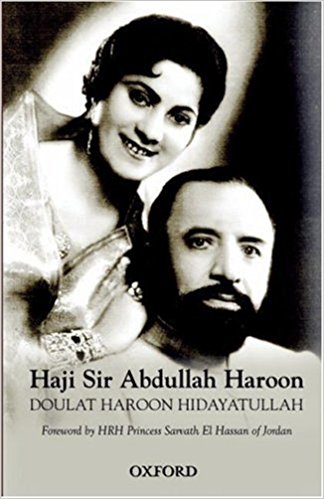
Doulat Haroon Hidayatullah

Haji Sir Hidayatullah Haroon (1872- 1942), the subject of the book under review, was a multifaceted man. A successful industrialist, a philanthropist, devout Muslim, a supporter of separation of Sind from Bombay Presidency, and a crusader for Pakistan as an independent Muslim homeland. The biography is rich in details and contains many primary documents,


Reviewed by: Salil Misra