Asian economic transformation has been underway despite the hiccups of the 2008 crisis that nearly brought the world economy to a standstill. Asia, at least that part of Asia spanning from India to Japan, now has dynamic leaders in Xi Jinping, Shinzo Abe and Narendra Modi, who are highly nationalist on one hand but also fairly pragmatic as seen in the last couple of years.
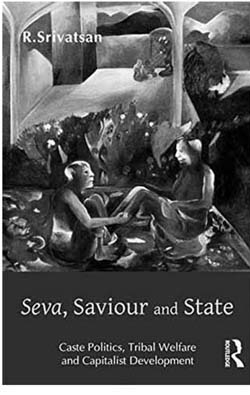
R. Srivatsan’s theoretical intervention through his recent book, Seva, Saviour and State: Caste Politics, Tribal Welfare and Capitalist Development is about the politics articulated within the concept and practice of seva—politics of caste, politics of Hindutva, politics of secularism, politics of nationalism and politics of development.
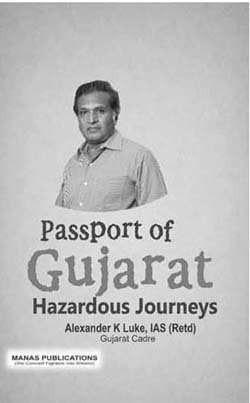
Books can often be likened to cricket matches. A T20 game is light and frothy. The results come in a single setting. A test match is leisurely. You need to invest both time and energy, but at the end, more often than not, it is far more pleasurable as your sense of participation and involvement is far greater.
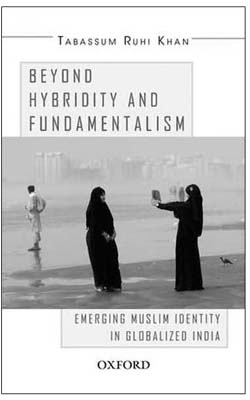
This is an interesting and timely book on the Muslim dominated area of Jamia Nagar that has mushroomed around the Jamia Millia Islamia University campus. The author Tabassum Ruhi Khan has been closely associated with the Jamia University as a student of the University’s well-known Mass Communications Research Centre (MCRC).
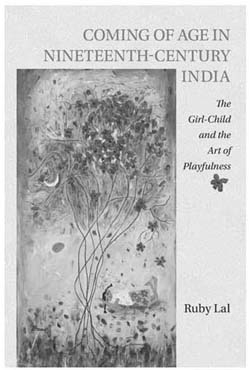
In her remarkable work, Secluded Scholars: Women’s Education and Muslim Social Reform in Colonial India (Oxford University Press, 1999), Gail Minault speaks of the ‘daughters of reform’ who contributed in multiple ways to the social and political movements in India, more than most acknowledged earlier.
‘How does a former colonial power deal with its colonial past, generations after the loss of empire?’ The opening line of Gert Oostindie’s piece in this book sums up the underlying theme of this work which is essentially a comparative study on the aftermath of Decolonization in the West, the way decolonization was memorialized and the subtle shifts in memorializing.