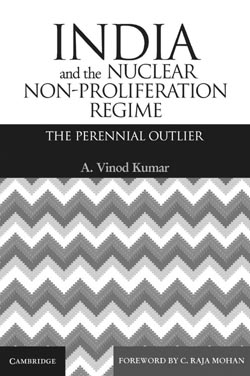
This book will generate very different responses from its readers. Indian academics may contest its premises and conclusions, but will have to grapple with a thesis so novel, which argues that Indian diplomacy flows from the Mahabharata, emerging from the progressively narrower and corroded conduits of Mahatma Gandhi and Jawaharlal Nehru…
A book with so formidable a scope as Rahul Govind’s The Infinite Double: Persons/Things/Empire/Economy cannot be limited to a critique. And if it’s salutary ethical tonality doesn’t determine its explicit intellectual object while also not being a mere critique of imperialism, then what sort of a book is it?
This is the latest offering of the author, who is the John Hawkes Professor of English and Humanities at Brown University, and the founding co-editor of the journal Post-Colonial Studies. Postcolonial studies represent an academic branch of studies which debunk and challenge western interpretations of thought.
This is a well-written book and goes into some considerable detail on each of the major battles of the 1962 conflict between India and China in both the Eastern and Western Sectors. The narrative is riveting and supported by maps particularly of battles in the Eastern Sector as well as reproductions of photographs of many important personalities and events associated with the conflict culled from multiple sources.
As redundant as publishing the screenplay for the latest film set in JK Rowling’s mersmerizing wizarding world is, the power of marketing is equally magical, such that every gullible fan has bought, ordered or stolen a copy of the screenplay of Fantastic Beasts And Where To Find Them.
The first sighting of the High Himalayas is invariably an occasion of wonderment, often an epiphany. Himalaya tells us how Wolfgang Buscher found himself shouting with delight as the peaks unexpectedly revealed themselves;