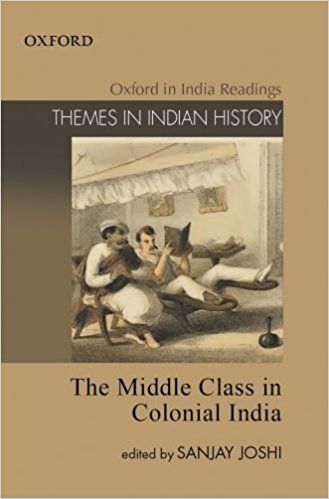
Sanjay Joshi

The role of the middle class in transforming India is being discussed and debated from the late 19th century. In the first two decades of Independence historians gave a lot of attention to the role of the middle class in the national movement, but from the 1970s the focus shifted to the peasants and subalterns…


Reviewed by: Dhirendra Datt Dangwal

Nasira Sharma

All translations cut both ways. While, on the one hand, they rarely cap­ture the nuances or flavour inherent in the original or even measure up to the fervour enshrined in it, they do serve in reaching out to a wider audience. This, latter aspect is especially and signifi­cantly heightened when the original in question is starkly socio-political in its content and has, as one of its primary aims, the creation of a widespread awareness of an unjust socio-economic and political system and its destruction.


Reviewed by: Saroj Nagi
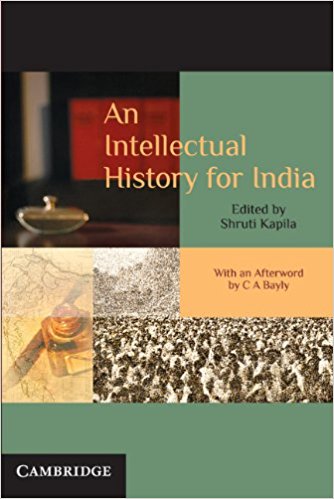
Shruti Kapila

The volume under review is a reprint of a special issue of the journal Modern Intellectual History which came out in April 2007. As Kapila notes in the introduction, intellectual history as a genre has not quite developed in the field of Modern Indian History inspite of the pioneering work of Eric Stokes and Ranajit Guha, more than half a century ago…


Reviewed by: Rahul Govind
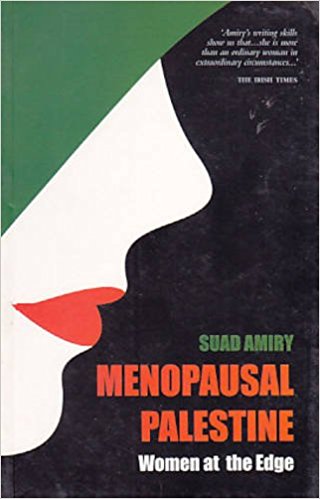
Suad Amiry

This is how Suad Amiry ends the preface to her book, Menopausal Palestine: Women on the Edge. So Amiry puts all the ingredients together, adds dollops of humour and irreverence, and succeeds in publishing an entertaining and insightful book on the lives of women in conflict-ridden Palestine…


Reviewed by: Sucharita Sengupta
Keki N. Daruwalla

In September 1968, the need for an Introduction to his collection of essays and reviews persuaded David McCut­chion to examine the state of the critic­ism of Indian writing in English. His assessment was characteristically res­trained but exacting: ‘the critical tradi­tion in India is weak,’, ‘Lack of critical, especially self-critical discrimination is certainly a feature of this situation’, ‘on the one hand it (takes) the form of dis­missive contempt.


Reviewed by: Vinay Dharwadker
Maloy Krishna Dhar

Maloy Krishna Dhar’s Train to India may be read as an antithetical account of another perilous journey described by Khushwant
Singh in his Train to Pakistan—both books offering harrowing insights into the colossal human tragedy that engulfed two countries in the wake of the partition of India…


Reviewed by: Aruna Chakravarti