These volumes, appearing 17 years after he passed away, put together A.K. Dasgupta’s writings penned over a timespan of 62 years starting from 1929. They include books, monographs, articles, and reviews authored by him, reminiscences by and of him, and a biographical sketch of the author by the editor.
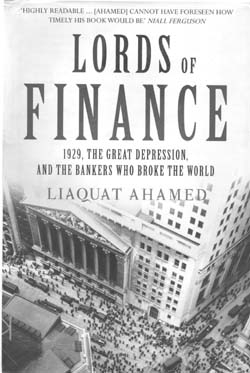
This is one of the finest books that I, at any rate, have ever read. Nor have I come across anyone who has read it say anything else. It is superb not just in the way it has been written, but also in what it contains. Above all, it is absolutely unique in the angle from which it has come at the topic, the Great Depression of 1929–32.
At first glance, both the books under review appear to be slick Mills and Boons, the perception reinforced in no small measure by the titles.
Acollection of spiritual-religious hymns, translated from the vernacular in English always anticipates criticism and even dissatisfaction because the original is deemed sacred and by that rule evokes divinity and any attempt to translate is considered an academic exercise which precludes any spiritual insight.
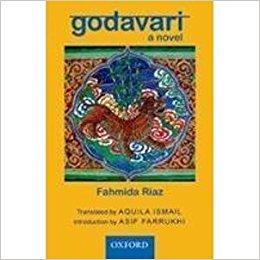
Fahmida Riaz is a Pakistani feminist, a crusader for human rights and an iconoclast. Apart from being a well-known poet, short story writer and a novelist in Urdu, she has been closely associated with the women’s movement in Pakistan.
Pakistani writers are of course in fashion. They are writing in all genres—the serious novel of note, rambunctious social novels, epic sagas, and of course, the simplest and yet the most complex writing form of all—the short story.