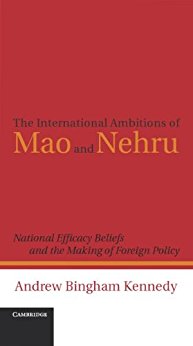
This is the 50th year of the war that China imposed on India in 1962. Was the war itself and the resulting consequences—the effects of which are still with us, not least, in the form of a ‘trust deficit’ in our relations with China—because of Mao’s ‘martial efficacy’ beliefs in contrast to Nehru’s ‘moral efficacy’ beliefs?
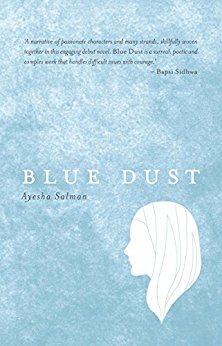
A debut novel, Ayesha Salman’s Blue Dust deserves praise for more than one reason. However, what struck me is its portrayal of complex psychological characters in an equally intricately knit narrative. Salman has written a story which is passionate, painful, psychological and surreal. I must confess it left me emotionally drained but perhaps intellectually enriched.
On the evening of November 17,1962, between seven o’clock and eleven o’clock, three senior General Officers sat in the Operations Room of HQ IV Corps at Tezpur, arguing among themselves endlessly whether four Infantry Division should be ordered to withdraw from Sela without offering battle…
Orientalism is thriving in 2012, albeit in a more subtle and refined form. The proverbial ‘white man’s burden’ is no more about a civilizing mission, but instead to fulfill a ‘responsibility to protect’, from the terror of the irrational other.
In the foreword to his novel A Life Incomplete the legendary Punjabi author Nanak Singh narrates the story of the very conception of his novel and interestingly, he calls the foreword ‘More Fact than Foreword’. To me this story is actually a masterstroke of the story teller’s fictional strategy:
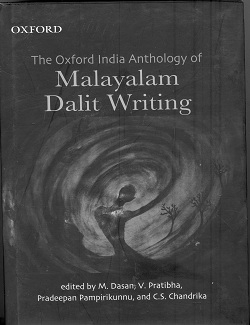
While documenting the creative and critical expressions of Malayali dalits from the beginnings of the 20th century to recent times, the volume under review remains sceptical of upper caste consciousness and historiography.