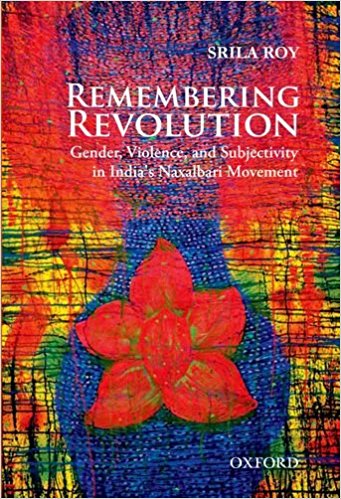
Srila Roy

Remembering Revolution is a perceptive, sympathetic and yet systematic and rigorous study of gender in the Naxalite movement in the 60s and 70s. There have been many studies of the Naxalite movement of late, but none that has explored the role of women from the point of view of their own experiences and motivations on the one hand, and on the other, examining the attitudes existing then among their male comrades, the party leadership, family and social milieu, which in turn influenced what they did and thought.


Reviewed by: Meena R. Menon

William M. Paul

The notion of the state is central to political theorizing but ironically in Marxism. Both with the originators and its latter exponents, its account is sketchy. Hegel, who was the starting point for Marx for all his major concerns, worked out the details of a modern state by his distinction between the realm of state and the realm of civil society but Marx’s account is sketchy and reticent in working out the details of the modern state.


Reviewed by: Sushila Ramaswamy
Indrani Chatterjee

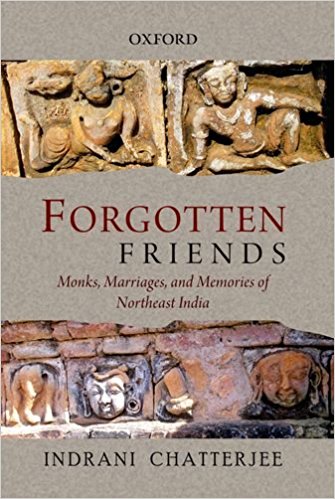
As I began to read Forgotten Friends: Monks, Marriages, and Memories of Northeast India a fresh bout of political mobilization demanding separate statehood had already spiralled up in Assam. These competing political claims had overlapping geographies and try to transcend the limits of modern political boundaries.


Reviewed by: Arupjyoti Saikia
Sanjay Srivastava

Can there be a more opportune time for an extensive discussion of sexualities in postcolonial India? Each and every day, it seems, we are confronted yet again by the systemic sexual violation of subaltern subjects, marked by one or more intersecting vectors of difference: caste, class, gender, sexual orientation.


Reviewed by: Anjali Arondekar
Assa Doron

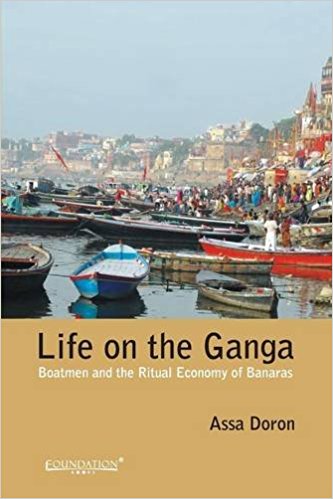
Assa Doron, Director of the South Asia Research Institute at the Australian National University, and formerly tourist, tour guide, then anthropologist in Banaras, demonstrates in this book the different, difficult, complexly interwoven feats that the discipline of anthropology is capable of. The setting of the book is Banaras.


Reviewed by: Nita Kumar