By Satish Alekar

In substance, the government dominated over society in all the spheres of activities during the pandemic. Alekar further suggests that constitutionalism that respects the division of powers between the legislative, executive and judicial organs of the state and operates through mechanisms of checks and balances has been gradually on the wane in India since 2014.


Reviewed by: Rajen Harshé
By Raj Gauthaman. Translated from the original Tamil by S. Theodore Baskaran

The essay on religion from Dalit perspective underscores the significance of religion for Dalits. Moving away from the atheistic and rationalistic critique of Brahminical Hinduism, Gauthaman asserts the significance of folk deities (non-Brahminic) in strengthening Dalit struggle against Brahminism and caste.


Reviewed by: Parthasarathi Muthukkaruppan
By M. V. Venkatram. Translated from the Tamil original by Sumi Kailasapathy

Thus, it was that the Parsis found a home in Gujarat and Jewish traders in Kochi. Within India itself, communities migrated for economic and religious reasons. The weavers of Saurashtra fled their native land after Ghazni destroyed the Somnath temple.


Reviewed by: Lakshmi Rajagopalan
By Santosh Desai

the simple pleasures of the good old khichhadi, the stall for South Indian food with an old but sturdy way of doing business, and the changing design of the kitchens, among others. The essays around work were particularly fascinating for me. Today the job market not only offers different kinds of jobs and modes of work/bussiness but also a more fundamental change in our very attitude towards work. A work-life balance is unfolding.


Reviewed by: Shimaila Mushtaq
By Ranjith Radhakrishnan

In the author’s note at the end of the second book, Ranjith highlights his approach to writing about Parashurama after the feedback he received on the first book. At the outset he clarifies that he wanted to avoid writing Parashurama as a mere mortal who later came to be considered as an avatara. Taking creative liberties, which he is upfront in calling out,


Reviewed by: Bharat Kidambi
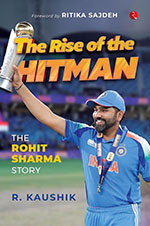
By R. Kaushik

The book is also one of the first to highlight his temperament and captaincy style in detail. It brings out both his meticulous preparation: spending hours in video analysis and attending team meetings with the bowling and batting units even when he wasn’t mandatorily needed, and his people-first management that balances his blunt honesty with backing for his players.


Reviewed by: Aditya Karnik